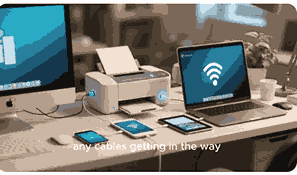
Inkjet printers are among the most popular and widely used types of printers in homes, offices, and businesses. They are known for their ability to produce high-quality text and images with sharp detail and vibrant colors. Unlike older printing technologies, an inkjet printer works by spraying tiny droplets of liquid ink directly onto paper. Because of their versatility, affordability, and compact designs, they have become a preferred choice for individuals and organizations looking for efficient and reliable printing solutions. This guide explores everything you need to know about inkjet printers, including their definition, components, features, advantages, and how they compare to other printing technologies.
What Is A Printer?
A printer is an electronic device that produces physical copies of digital documents, images, or data stored on a computer, smartphone, or other device. Printers transform soft copies into hard copies by transferring ink or toner onto paper. There are different types of printers, such as inkjet, laser, dot matrix, and thermal printers, each suited for specific applications. Modern printers often come with additional features like scanning, copying, and wireless connectivity, making them multifunctional. Printers are essential for homes, offices, schools, and businesses because they help create reports, photos, invoices, and marketing materials quickly and efficiently.
Definition Of An Inkjet Printer
An inkjet printer is a type of printer that sprays fine droplets of liquid ink directly onto paper to create an image or text. The resolution of an inkjet printer is typically measured in dots per inch (DPI), and most inkjet models offer resolutions of 300 DPI to 1200 DPI or higher, ensuring excellent print quality. They are especially popular for photo printing due to their ability to produce smooth gradients and lifelike colors. Inkjet printers come in various sizes and models, from simple budget-friendly home printers to advanced professional machines designed for graphic designers and photographers.
How An Inkjet Printer Works
Inkjet printers operate using nozzles that eject microscopic droplets of ink directly onto the paper surface. The printhead moves back and forth while feeding paper through the rollers. Depending on the model, an inkjet printer may use thermal bubble technology or piezoelectric technology to push ink through the nozzles. The droplets combine to form precise letters, shapes, and images, producing sharp results even at small sizes. Most inkjet printers also use multiple ink cartridges, typically including black, cyan, magenta, and yellow, to reproduce a wide range of colors. This precise spraying technique makes inkjet printing highly accurate.
Components Of An Inkjet Printer
Inkjet printers consist of several essential components. The printhead is responsible for spraying the ink onto the paper. Ink cartridges or ink tanks store and supply the liquid ink needed for printing. The paper feed mechanism moves the paper accurately through the machine during the printing process. A control circuit coordinates the movement of the printhead and paper feed to ensure precision. Some models also feature wireless modules, USB ports, and display screens for user-friendly operation. Together, these components make inkjet printers efficient, compact, and reliable devices suitable for personal and professional use.
Types Of Inkjet Printers
There are different types of inkjet printers designed for varying needs. Standard inkjet printers are ideal for everyday document and image printing. Photo inkjet printers specialize in high-resolution photo prints, often using more than four ink colors. Business inkjet printers are faster and designed for handling higher volumes of documents, making them suitable for office environments. Multifunction inkjet printers include additional features such as scanning, copying, and faxing. Professional-grade inkjet printers are used by graphic designers and photographers for producing gallery-quality prints. Choosing the right type depends on usage, budget, and printing requirements.
Advantages Of An Inkjet Printer
Inkjet printers offer many advantages. They provide excellent print quality with sharp text and vivid colors, making them ideal for producing photos, documents, and graphics. They are generally more affordable to purchase compared to laser printers, making them suitable for home users. Inkjet printers are also compact and lightweight, saving space in small offices or homes. Many models support wireless printing, mobile connectivity, and cloud services for convenience. They can print on various paper sizes and textures, including photo paper, envelopes, and labels. Inkjet printers are also quieter during operation, making them less disruptive in office environments.
Disadvantages Of An Inkjet Printer
Despite their benefits, inkjet printers have certain drawbacks. The cost of ink cartridges is often high, and frequent replacements can make long-term use expensive. Ink cartridges may dry out if the printer is not used regularly, leading to clogs in the nozzles. Printing speed is usually slower compared to laser printers, especially for large-volume jobs. Inkjet prints can smudge or fade if not handled carefully, especially when using low-quality paper. They also tend to have a shorter lifespan in heavy-use environments. These disadvantages make inkjet printers better suited for light to moderate printing rather than large-scale office needs.
Difference Between Inkjet Printers And Laser Printers
Inkjet and laser printers differ in their printing technologies and applications. Inkjet printers use liquid ink sprayed through nozzles, while laser printers use toner powder fused onto paper with heat. Inkjet printers excel in producing high-quality images and are preferred for photo printing. Laser printers, on the other hand, are faster and more cost-efficient for large volumes of text documents. Inkjet printers are typically smaller, quieter, and cheaper upfront, whereas laser printers have higher initial costs but lower long-term expenses. Choosing between the two depends on whether image quality or high-volume efficiency is more important.
Uses Of An Inkjet Printer
Inkjet printers are used in homes, schools, and businesses for a wide range of tasks. They are commonly used to print documents such as letters, reports, and assignments. Many households use inkjet printers for photo printing due to their ability to produce detailed and colorful images. In offices, they are useful for printing presentations, marketing materials, and graphics. Inkjet printers can also be used for specialized printing, such as greeting cards, labels, and invitations. Their versatility makes them a practical choice for users needing a balance of print quality, affordability, and multifunctionality.
Buying Guide For Inkjet Printers
When choosing an inkjet printer, several factors should be considered. Print quality, measured in DPI, is crucial for detailed images and documents. Print speed, measured in pages per minute (PPM), determines efficiency. Connectivity options such as Wi-Fi, Bluetooth, and USB ensure compatibility with multiple devices. Ink cost and availability are also critical because they influence long-term expenses. Features like automatic duplex printing, scanning, and copying add convenience. Paper handling capacity should also be considered for heavy usage. By comparing these features, buyers can select an inkjet printer that meets their personal or business needs effectively.
Maintenance Of An Inkjet Printer
Maintaining an inkjet printer is important for long-term performance. Regularly using the printer prevents ink from drying out in the nozzles. Cleaning cycles should be run periodically to remove clogs. Cartridges must be replaced promptly when ink runs low to avoid damage. Using high-quality paper prevents smudging and prolongs the life of the printhead. Keeping the printer covered when not in use protects it from dust. Software updates should be installed to ensure compatibility and performance. Proper maintenance ensures that the printer continues to produce sharp, reliable prints and helps avoid costly repairs or replacements.
Conclusion
Inkjet printers remain one of the most versatile and widely used printing devices today. They provide exceptional print quality, affordability, and convenience, making them suitable for personal, academic, and professional use. Despite certain drawbacks like slower speeds and higher ink costs, their ability to produce detailed, vibrant prints ensures their continued popularity. Choosing the right inkjet printer depends on understanding your printing needs, whether for documents, photos, or multifunctional purposes. With proper use and maintenance, inkjet printers can serve as a reliable and valuable tool in both home and office environments.
Frequently Asked Questions
1. What Is An Inkjet Printer?
An inkjet printer is a device that sprays tiny droplets of liquid ink directly onto paper to produce images and text. Unlike laser printers, which use toner powder and heat, inkjet technology relies on precise nozzles that release microscopic ink particles. This makes it possible to achieve very high resolutions, often exceeding 1200 DPI, which results in sharp, clear prints. Inkjet printers are widely used for printing photos, documents, and graphics. They are affordable, compact, and versatile, though the ongoing cost of ink cartridges can be high compared to the initial purchase price of the printer itself.
2. How Does An Inkjet Printer Work?
An inkjet printer works by ejecting tiny ink droplets from its nozzles directly onto paper. The printhead, which houses the nozzles, moves back and forth across the paper while the paper feed mechanism advances the sheet forward. Depending on the model, the printer may use thermal bubble or piezoelectric technology to push ink out. Colors are produced by combining different inks from multiple cartridges, typically black, cyan, magenta, and yellow. This system allows inkjet printers to reproduce detailed images, smooth gradients, and sharp text. Their precision makes them ideal for tasks that require high print quality.
3. What Are The Main Features Of An Inkjet Printer?
Inkjet printers are known for their high-resolution printing capabilities, often achieving over 1200 DPI for sharp and vibrant output. They are compact and lightweight, making them suitable for small spaces. Many models support wireless printing through Wi-Fi, Bluetooth, or cloud services, which enhances convenience. Inkjet printers can print on different media, including standard paper, photo paper, and labels. Some models are multifunctional, offering scanning, copying, and faxing. They are generally affordable to purchase, though the cost of ink cartridges is higher. Inkjet printers are also quieter during operation, making them less disruptive in home and office settings.
4. What Are The Advantages Of Using An Inkjet Printer?
Inkjet printers deliver superior print quality with crisp text and vibrant colors, making them perfect for producing detailed images, photos, and professional documents. They are typically less expensive to purchase than laser printers, which makes them accessible to students, families, and small businesses. Inkjet printers are lightweight and compact, saving valuable space. Many models include advanced connectivity options, such as wireless printing and mobile compatibility. They can print on various media types and sizes, from envelopes to photo paper. Additionally, they operate quietly and require minimal warm-up time, offering users convenience and efficiency in daily printing tasks.
5. What Are The Disadvantages Of An Inkjet Printer?
The disadvantages of an inkjet printer mainly include high long-term costs due to expensive ink cartridges. Frequent replacement of cartridges can make them costly for heavy users. Inkjet printers are also slower than laser printers, making them less efficient for large print volumes. Prints may smudge if touched immediately after printing, and they can fade over time, especially on low-quality paper. Another drawback is that the ink cartridges may dry out if not used regularly, causing clogging in the nozzles. Additionally, inkjet printers often have shorter lifespans when used in demanding environments, requiring more maintenance and care.
6. What Are The Different Types Of Inkjet Printers?
Inkjet printers come in various types designed for different needs. Standard inkjet printers are basic models suitable for everyday document and image printing. Photo inkjet printers specialize in high-resolution images and often use more than four ink colors for superior detail. Business inkjet printers are faster and designed to handle larger volumes of printing, making them ideal for offices. Multifunction inkjet printers combine printing with scanning, copying, and faxing. Professional inkjet printers are designed for graphic designers and photographers, offering gallery-quality results. Each type caters to specific usage requirements, allowing buyers to choose based on needs and budget.
7. How Is An Inkjet Printer Different From A Laser Printer?
An inkjet printer differs from a laser printer in the printing method it uses. Inkjet printers spray liquid ink onto paper, while laser printers use toner powder fused by heat. Inkjet printers excel in producing detailed, high-quality images and are preferred for photo printing. Laser printers, however, are much faster and more cost-efficient for printing large volumes of text-based documents. Inkjet printers are generally cheaper upfront and more compact, making them ideal for homes and small offices. Laser printers have higher initial costs but lower long-term printing expenses, especially for high-volume users in professional environments.
8. What Are The Main Components Of An Inkjet Printer?
Inkjet printers are built with several key components. The printhead contains nozzles that spray ink droplets onto the paper. Ink cartridges or ink tanks store the liquid ink. A paper feed system moves the sheets through the printer during operation. The control circuit manages communication between the computer and printer, ensuring precise movements. Rollers guide the paper smoothly to prevent jams. Many modern inkjet printers also include wireless modules, USB ports, and LCD screens for easy navigation. Together, these components allow inkjet printers to deliver high-quality prints efficiently in homes, schools, and professional environments.
9. What Is The Resolution Of An Inkjet Printer?
The resolution of an inkjet printer is typically measured in dots per inch (DPI), which indicates how many ink dots are applied per square inch of paper. Most consumer inkjet printers offer resolutions ranging from 300 DPI to 1200 DPI, while advanced models can reach 2400 DPI or higher. Higher DPI results in sharper text and more detailed images, making it ideal for photo printing and professional graphics. The resolution directly impacts print quality, with smoother gradients and finer details at higher settings. However, higher resolution settings may also slow down printing speeds and consume more ink.
10. What Are The Common Uses Of An Inkjet Printer?
Inkjet printers are widely used for a variety of applications. In homes, they are popular for printing school assignments, personal documents, and photographs. Businesses use inkjet printers to produce professional documents, marketing materials, and presentations. Graphic designers and photographers rely on inkjet printers for high-resolution prints that accurately reproduce colors and details. They are also used for printing labels, invitations, and greeting cards. Their ability to handle different media types and sizes makes them versatile. Inkjet printers are suitable for users who require high-quality printing in environments where speed and high-volume production are not the main priorities.
11. How Much Does An Inkjet Printer Cost?
The cost of an inkjet printer varies depending on the model and its features. Basic home models can be purchased for as little as $40 to $80, offering simple printing functions. Mid-range printers with wireless connectivity, scanning, and copying features usually range from $100 to $200. High-end photo and professional inkjet printers, designed for advanced printing tasks, can cost $300 to $1000 or more. While the upfront cost is often affordable, ongoing expenses such as ink cartridges or refill systems can significantly increase long-term costs, making it important to consider total ownership costs before purchasing.
12. How Long Does An Inkjet Printer Last?
The lifespan of an inkjet printer depends on usage, maintenance, and quality of the model. On average, a consumer-grade inkjet printer lasts between three to five years with regular use. Proper maintenance, such as running cleaning cycles, preventing dust buildup, and replacing cartridges promptly, can extend the life of the printer. Heavy use in offices may shorten its lifespan, while occasional home use can make it last longer. Professional-grade inkjet printers, designed for higher durability, may last up to seven years or more. Ultimately, how well a user maintains the printer plays a major role in longevity.
13. Why Do Inkjet Printers Use Multiple Cartridges?
Inkjet printers use multiple cartridges, usually black, cyan, magenta, and yellow, to produce a wide range of colors. By combining different amounts of these inks, the printer can reproduce detailed and vibrant images with smooth color transitions. Some advanced models include additional cartridges such as light cyan, light magenta, or gray to improve photo quality and tonal accuracy. Multiple cartridges also help conserve ink, as only the depleted color needs replacement rather than the entire set. This system makes inkjet printers more efficient for color printing while maintaining flexibility for producing both documents and photographs.
14. Can An Inkjet Printer Print Photos?
Yes, an inkjet printer can print high-quality photos, often with results that rival professional photo labs. Inkjet printers achieve this by using fine ink droplets, high resolutions, and multiple color cartridges to produce lifelike details and vibrant shades. Specialized photo inkjet printers are equipped with additional color cartridges and higher DPI settings, specifically designed for producing gallery-quality prints. Users can print on glossy photo paper, matte paper, or specialty media for different effects. While printing photos on an inkjet printer provides excellent quality, it may consume more ink and be slower compared to printing regular documents.
15. What Is The Printing Speed Of An Inkjet Printer?
The printing speed of an inkjet printer is typically measured in pages per minute (PPM). Consumer-grade inkjet printers generally print between 5 to 15 pages per minute for black-and-white documents and 3 to 10 pages per minute for color documents. Higher-end business models can achieve speeds of 20 to 30 PPM or more, making them suitable for office use. While inkjet printers are slower than laser printers, their strength lies in producing high-quality prints rather than bulk speed. Printing speeds can also vary depending on print settings, resolution, and whether duplex (double-sided) printing is enabled.
16. How Do You Maintain An Inkjet Printer?
Maintaining an inkjet printer is essential for ensuring long-term performance and print quality. Users should run regular cleaning cycles to prevent ink from drying in the nozzles and causing clogs. The printer should be used periodically to keep ink flowing smoothly. Cartridges need to be replaced promptly when low or empty to avoid damaging the printhead. Using high-quality paper reduces smudging and protects the printer components. Dust should be removed from the exterior and paper feed areas. Additionally, software and firmware updates should be installed when available. Proper care significantly extends the life and efficiency of the printer.
17. Are Inkjet Printers Suitable For Office Use?
Inkjet printers can be suitable for office use depending on the size and printing needs of the business. They are excellent for offices that require high-quality color printing for reports, presentations, and marketing materials. Business-grade inkjet models are faster and capable of handling higher print volumes than standard home versions. However, for offices with heavy document printing needs, laser printers are usually more cost-effective and efficient. Inkjet printers are best suited for small businesses, creative industries, or work environments where image quality is more important than speed or large-scale production. Choosing depends on workload demands.
18. What Is The Difference Between Thermal Bubble And Piezoelectric Inkjet Technology?
Inkjet printers use either thermal bubble technology or piezoelectric technology to push ink through the nozzles. Thermal bubble inkjet printers heat the ink to create vapor bubbles that force droplets out of the nozzles onto the paper. This method is commonly used by manufacturers like Canon and HP. Piezoelectric inkjet printers, such as those made by Epson, use electrically charged crystals that change shape when voltage is applied, squeezing ink out precisely. Piezoelectric technology generally provides greater durability, accuracy, and compatibility with different types of ink, making it popular in professional and industrial inkjet applications.
19. Can An Inkjet Printer Be Connected Wirelessly?
Yes, many modern inkjet printers support wireless connectivity, allowing users to print from computers, smartphones, and tablets without needing cables. Wireless inkjet printers often include Wi-Fi Direct, Bluetooth, or cloud printing services like Google Cloud Print and Apple AirPrint. This makes it easy to print documents and photos directly from mobile devices or remote locations. Wireless connectivity is especially useful in offices where multiple users share the same printer. Setup is usually simple, involving connecting the printer to a Wi-Fi network and installing the necessary drivers. This flexibility enhances productivity and convenience in both homes and businesses.
20. What Is The Best Inkjet Printer For Home Use?
The best inkjet printer for home use depends on individual needs such as document printing, photo printing, or multifunctional features. For students and families, affordable models like HP DeskJet or Canon PIXMA series offer reliable everyday printing. Photo enthusiasts may prefer Epson EcoTank or Canon PIXMA Pro models, which provide superior photo quality and lower running costs with refillable tanks. Those who need scanning and copying capabilities may opt for multifunction inkjet printers. Key factors to consider include print resolution, speed, wireless connectivity, and long-term ink costs. Choosing the right model ensures convenience, quality, and affordability at home.
FURTHER READING
- What Is A Laser Printer? | Definition, Meaning, Types, Benefits, Uses, Features, And Laser Printing Technology
- What Is A Wireless Printer? | Understanding Features, Benefits, And How Wireless Printers Work
- How To Fix A Printer Paper Jam | Easy Troubleshooting Guide For Smooth Printing
- Why Is My Printer Not Printing? | Common Printer Problems And Easy Fixes For Printing Issues
- How To Install A Printer Driver | A Step-By-Step Printer Driver Installation Guide
- Which Printer Is Best For Office Use? | A Complete Guide To Choosing The Best Office Printer For Your Business Needs
- Which Printer Is Best For Home Use? | Best Printers For Home Use, Affordable Ink, Wireless Printing, And Top Picks For Families
- What Are The Different Types Of Printers? | Printer Categories, Features, And Functions Explained For Buyers And Users
- How Does A Printer Work? | Understanding Printing Technology, Types, Functions, And Processes
- What Is A Printer? | Definition, Functions, Types, Uses, And Benefits Of Printers