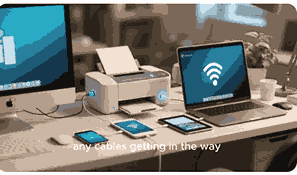
Printers have become an essential part of modern homes, offices, schools, and industries, offering various ways to produce high-quality documents, images, and graphics. Understanding the different types of printers is crucial for anyone looking to buy, use, or maintain one, as each printer comes with unique advantages, technologies, and applications. Whether you need a device for personal use, professional printing, or industrial production, knowing the types of printers available helps you make the best choice and optimize productivity. This comprehensive guide explores the major categories of printers, their features, functions, and the industries where they are most widely used.
What Is A Printer?
A printer is an electronic output device that converts digital data into a physical form, usually by producing text, graphics, or images on paper or other media. Printers function as essential peripherals for computers, smartphones, and networks, allowing users to create hard copies of electronic files. They come in a wide range of technologies, including inkjet, laser, thermal, and 3D printing. Each printer type differs in speed, resolution, durability, and cost-effectiveness, depending on its intended use. Printers may be connected through USB, Ethernet, or Wi-Fi, and many modern printers also offer multifunction capabilities such as scanning, copying, and faxing. This versatility makes them indispensable for business, education, healthcare, and creative industries.
Inkjet Printers
Inkjet printers are among the most popular types of printers, known for their ability to produce high-quality prints with sharp detail and vibrant colors. They work by spraying liquid ink directly onto paper using fine nozzles. Inkjet printers are ideal for printing photographs, marketing materials, and documents that require precise image reproduction. They are generally affordable, but their ink cartridges can be expensive to replace, making long-term running costs higher than other models. Inkjet printers are widely used in homes, small offices, and creative industries.
Laser Printers
Laser printers are fast, efficient, and cost-effective, especially for high-volume printing. They use toner powder and a laser beam to transfer images or text onto paper. Laser printers are best for office environments where speed and sharp black-and-white document printing are priorities, although color laser printers are also available. They have lower cost-per-page compared to inkjet printers and can handle large workloads with ease. Their precision, durability, and reliability make them essential in corporate and educational settings.
Dot Matrix Printers
Dot matrix printers are impact printers that strike an ink-soaked ribbon against paper to create images and text. They are not as common today due to their lower print quality and noisy operation, but they remain valuable in industries that require multi-part forms or carbon copy printing, such as banking, logistics, and inventory management. Dot matrix printers are known for durability, long lifespan, and low running costs, making them suitable for specialized tasks.
Thermal Printers
Thermal printers use heat to produce images directly on specially coated paper or via heat transfer with ribbons. They are widely used in retail stores, ATMs, ticketing machines, and barcode labeling. Thermal printers are fast, reliable, and low maintenance because they have fewer moving parts. However, thermal paper can fade over time, and the printers are mostly limited to monochrome outputs, making them unsuitable for high-quality photo or color printing needs.
3D Printers
3D printers represent advanced printing technology by creating three-dimensional objects from digital designs. They work by adding material layer by layer, often using plastic, resin, or metal. 3D printing has revolutionized industries such as healthcare, engineering, construction, and manufacturing by enabling rapid prototyping and custom production. Although more expensive than traditional printers, 3D printers open opportunities for innovation and personalized product development.
Multifunction Printers
Multifunction printers, also known as all-in-one printers, combine printing, scanning, copying, and faxing functions into one device. They are convenient for home offices and businesses that need multiple features in a single machine. Multifunction printers can be either inkjet or laser-based, offering flexibility depending on the user’s needs. Their compact design, cost savings, and productivity benefits make them a popular choice for both personal and commercial use.
Photo Printers
Photo printers are designed specifically for printing high-resolution photographs and images. They deliver superior color accuracy and detail compared to standard inkjet printers. Many photo printers use advanced ink technologies and can print borderless images directly from cameras, memory cards, or mobile devices. These printers are commonly used by professional photographers, graphic designers, and hobbyists who require premium-quality print outputs.
Plotters
Plotters are specialized printers designed for large-format printing tasks such as architectural drawings, engineering blueprints, posters, and maps. Instead of printing pixel by pixel, plotters use pens or cutting tools to draw continuous lines, ensuring precision in technical documents. They are widely used in industries such as engineering, construction, and design, where accuracy and scale are critical.
Portable Printers
Portable printers are compact and lightweight devices that allow users to print documents or photos while traveling. They are often wireless and battery-powered, making them ideal for mobile professionals, students, and field workers. While they may not match the speed or capacity of office printers, their portability and convenience make them highly practical for on-the-go printing needs.
Industrial Printers
Industrial printers are heavy-duty machines built for large-scale, continuous printing operations. They are used in manufacturing, packaging, textile printing, and product labeling. These printers are designed for speed, efficiency, and durability, often capable of printing on non-paper surfaces such as plastic, fabric, and metal. Industrial printers are essential for businesses that require high-volume, specialized printing tasks.
Conclusion
Printers have evolved significantly from simple document machines to advanced technologies capable of producing high-resolution images, large-scale blueprints, and even three-dimensional objects. Each type of printer is designed to serve specific needs, from everyday document printing to industrial applications. By understanding the unique functions and advantages of each printer category, users can make informed decisions that suit their personal, business, or professional requirements.
Frequently Asked Questions
1. What Are The Different Types Of Printer?
The different types of printers include inkjet, laser, dot matrix, thermal, 3D, multifunction, photo printers, plotters, portable printers, and industrial printers. Inkjet printers are known for high-quality images, while laser printers excel in speed and efficiency for large volumes. Dot matrix printers are still valuable for carbon copy forms, whereas thermal printers dominate retail and ticketing industries. 3D printers are transformative, creating objects layer by layer. Multifunction printers combine scanning, copying, and faxing, while photo printers specialize in high-resolution photography. Plotters handle technical drawings, portable printers provide mobile printing, and industrial printers serve manufacturing and packaging industries. Each type has unique strengths depending on the application, making it important for buyers to choose based on needs, workload, and budget.
2. What Is An Inkjet Printer And How Does It Work?
An inkjet printer is a device that sprays tiny droplets of liquid ink directly onto paper to produce text and images. It works through precision nozzles that allow accurate color mixing, making it ideal for printing high-resolution photos and detailed graphics. Inkjet printers are affordable to purchase but can be costly to maintain due to expensive ink cartridges. They are common in homes, small businesses, and creative industries because they produce sharp, vibrant outputs. Many modern inkjet printers also support wireless connectivity, mobile printing, and multifunction features. Despite slower speeds compared to laser printers, inkjet printers remain popular due to their versatility, excellent print quality, and ability to handle a variety of media types and sizes.
3. What Is A Laser Printer And Why Is It Popular?
A laser printer uses toner powder and a laser beam to produce sharp text and images on paper. It is popular because of its speed, efficiency, and ability to handle high-volume printing at a low cost per page. Laser printers are widely used in offices, schools, and businesses where large amounts of documents are printed regularly. Black-and-white laser printers are especially valued for producing crisp text, while color laser printers are excellent for presentations and reports. Unlike inkjet printers, they are less prone to smudging and can print thousands of pages per cartridge. Their reliability, durability, and overall cost savings make them a top choice for environments requiring consistent and professional-quality printing.
4. What Is A Dot Matrix Printer And Where Is It Used?
A dot matrix printer is an impact printer that creates characters and images by striking pins against an inked ribbon to form patterns of dots. Although considered outdated for general use, it remains valuable in industries that require multi-part forms, invoices, or carbon copies, such as banking, logistics, and retail. Dot matrix printers are durable, affordable to operate, and capable of functioning in harsh environments. Their ability to produce duplicates in a single pass makes them ideal for businesses that need reliable record-keeping systems. While the print quality and noise levels are less appealing compared to inkjet or laser printers, dot matrix printers still hold a place in specific commercial and industrial applications where endurance and practicality outweigh aesthetics.
5. What Is A Thermal Printer And What Are Its Applications?
A thermal printer uses heat to create images on specially coated thermal paper or by transferring ink from a ribbon onto paper. These printers are widely used in retail, ticketing, shipping, ATMs, and barcode labeling due to their speed and reliability. Thermal printers are low maintenance because they have fewer moving parts compared to other printers. They produce clear outputs quickly, which makes them suitable for businesses with high customer turnover. However, thermal paper can fade over time, and most thermal printers are limited to monochrome printing. Despite these drawbacks, their compact size, efficiency, and cost-effectiveness make them indispensable in industries that require quick, on-demand print solutions for receipts, labels, and tickets.
6. What Is A 3D Printer And How Is It Used?
A 3D printer is an advanced machine that creates physical three-dimensional objects from digital designs by depositing material layer by layer. Common materials used include plastic, resin, and metal. 3D printing has transformed industries like healthcare, automotive, aerospace, and manufacturing by allowing rapid prototyping, customized designs, and even the production of complex parts. In healthcare, 3D printers are used to create prosthetics and medical models. In construction, they are applied in building small-scale structures. Although 3D printers can be costly and require specialized software, their innovation potential is unmatched. They allow creators and businesses to experiment, design, and produce products faster, more efficiently, and with greater customization compared to traditional manufacturing methods.
7. What Are The Advantages Of A Multifunction Printer?
A multifunction printer, also known as an all-in-one printer, combines printing, scanning, copying, and faxing in one machine. The main advantage is convenience, as users can perform multiple tasks without buying separate devices. These printers save space, reduce equipment costs, and simplify workflow. Depending on the model, multifunction printers can be either inkjet or laser-based, providing flexibility for both high-quality image printing and high-speed document handling. Many modern models also include wireless connectivity, cloud printing, and mobile integration, making them highly versatile for both home and business use. Their efficiency, compact design, and cost-effectiveness make them a practical choice for users seeking productivity in one device without sacrificing performance or print quality.
8. What Is A Photo Printer And Why Is It Important?
A photo printer is a specialized printer designed to produce high-resolution photographs with exceptional clarity and color accuracy. Unlike standard inkjet or laser printers, photo printers use advanced ink technologies to capture fine details and a wide color spectrum. They can print borderless photos and often support direct printing from cameras, memory cards, or mobile devices. Professional photographers and graphic designers rely on photo printers to deliver premium-quality prints suitable for portfolios, exhibitions, or client presentations. Even hobbyists benefit from these printers by producing personal keepsakes at home. While photo printers may have higher operating costs, the ability to produce stunning, long-lasting images makes them an invaluable tool for anyone prioritizing visual quality and professional-grade photography outputs.
9. What Is A Plotter Printer And Who Uses It?
A plotter printer is a large-format printer that produces detailed technical drawings, maps, and designs by drawing continuous lines instead of printing dots. Plotters are widely used by architects, engineers, and designers who need precision and scale for blueprints, CAD drawings, and posters. Unlike traditional printers, plotters use pens, blades, or cutting tools to deliver high accuracy in line drawings. They can handle oversized sheets of paper and various materials, making them suitable for industries that require professional presentations of complex designs. Plotters are essential in fields such as construction, civil engineering, and graphic design where accuracy and quality matter most. Their ability to deliver large-scale, precise documents makes them indispensable for specialized printing needs.
10. What Is A Portable Printer And How Does It Work?
A portable printer is a lightweight, compact device designed for mobile printing needs. These printers are usually battery-powered and connect wirelessly to smartphones, tablets, or laptops via Bluetooth or Wi-Fi. Portable printers are useful for students, business professionals, and field workers who need to print on the go, such as contracts, receipts, or photographs. Although smaller and slower than office printers, they are highly convenient when traditional printing options are unavailable. Many portable printers are designed for photo printing, while others support full-page document printing. Their main advantage is mobility and ease of use, making them practical for people who frequently travel or require immediate printing solutions outside conventional office or home environments.
11. What Is An Industrial Printer And What Are Its Uses?
An industrial printer is a heavy-duty machine designed for large-scale, continuous printing tasks in industries such as packaging, textiles, and manufacturing. These printers are capable of printing on non-paper surfaces, including plastic, fabric, and metal. Industrial printers are built for speed, durability, and efficiency, handling thousands of prints without interruption. They are widely used in labeling, product marking, and high-volume printing applications where precision and reliability are critical. Unlike standard consumer printers, industrial models are more expensive and require professional maintenance. However, their performance and ability to integrate into production lines make them essential for businesses that depend on high-volume, specialized printing to meet operational demands and maintain efficiency in large-scale manufacturing environments.
12. How Does A Printer Differ From A Plotter?
A printer and a plotter differ mainly in their output method and intended use. Printers create images by applying ink or toner in dots or patterns, making them suitable for text documents, photos, and general printing tasks. Plotters, on the other hand, draw continuous lines using pens or cutting tools, producing precise, large-scale technical drawings and blueprints. While printers are versatile for everyday use in homes and offices, plotters are specialized devices used by engineers, architects, and designers. Plotters can handle oversized paper formats and provide high accuracy, making them indispensable for industries requiring exact scaling and detailed line work. In summary, printers are for general-purpose tasks, while plotters serve technical and design applications.
13. What Is The Difference Between An Inkjet Printer And A Laser Printer?
The difference between an inkjet printer and a laser printer lies in technology, cost, and application. Inkjet printers spray liquid ink onto paper, producing high-quality images and photographs with vivid colors. They are ideal for creative projects and small-scale printing but have higher running costs due to expensive cartridges. Laser printers, however, use toner powder and lasers to create prints quickly and efficiently, especially for text documents. They are cost-effective for high-volume printing and are common in offices and educational institutions. Inkjet printers excel in detail and image accuracy, while laser printers are valued for speed, durability, and lower cost per page. The choice depends on whether the user prioritizes image quality or efficiency.
14. What Is The Main Advantage Of A Thermal Printer?
The main advantage of a thermal printer is its ability to produce fast, reliable prints with minimal maintenance. Since thermal printers rely on heat rather than ink or toner, they have fewer moving parts, making them more durable and less prone to breakdowns. They are especially beneficial for businesses requiring continuous receipt, label, or ticket printing. Thermal printers are compact and energy-efficient, providing consistent performance in busy environments like retail, hospitality, and transportation. Their quiet operation and low operational costs further enhance their practicality. Although limited in color and long-term print durability, their efficiency and reliability make them an essential tool in industries where speed and dependability matter most for daily operations.
15. Why Are 3D Printers Considered Revolutionary?
3D printers are considered revolutionary because they transform digital designs into physical objects, enabling industries and individuals to create customized items with unmatched precision. This additive manufacturing process reduces material waste and allows for rapid prototyping, which speeds up product development in fields like engineering, healthcare, and aerospace. 3D printing empowers creators to experiment with innovative designs, produce spare parts on demand, and even develop medical implants tailored to patients. Its ability to build complex shapes that traditional manufacturing cannot achieve makes it groundbreaking. Despite high costs and technical requirements, 3D printing opens limitless possibilities for innovation, personalization, and efficiency, driving significant advancements in industries worldwide and reshaping how products are created and delivered.
16. What Are The Limitations Of A Dot Matrix Printer?
The limitations of a dot matrix printer include low print quality, slow speed, and noisy operation compared to modern alternatives. Their outputs consist of dot-based images and text, which lack the sharpness and clarity offered by inkjet and laser printers. While they excel in durability and multi-part form printing, dot matrix printers are unsuitable for tasks requiring high-resolution graphics or professional presentations. Another drawback is their reliance on continuous feed paper and limited color capabilities. Despite these shortcomings, they remain relevant in industries where durability, low operating costs, and carbon copy outputs are essential. However, for general printing needs, most users prefer faster, quieter, and more advanced technologies like inkjet and laser printers.
17. How Do Photo Printers Differ From Standard Printers?
Photo printers differ from standard printers by focusing on producing high-quality photographic images with superior resolution and color accuracy. Unlike general inkjet or laser printers, photo printers use specialized inks and papers to deliver vibrant, long-lasting prints. Many support borderless printing and can connect directly to cameras, memory cards, or mobile devices for convenient use. They are especially important for photographers, designers, and hobbyists who value detailed, professional-grade results. While standard printers are versatile for text, graphics, and basic photo outputs, they cannot match the precision and richness of photo printers. Although photo printers may have higher costs, they are essential for individuals and businesses prioritizing image quality over speed or cost-efficiency.
18. Why Are Multifunction Printers Cost-Effective?
Multifunction printers are cost-effective because they consolidate several office tasks—printing, scanning, copying, and faxing—into one device, reducing the need to purchase and maintain multiple machines. This not only saves money but also conserves space and streamlines workflow. Businesses and home offices benefit from the efficiency and convenience provided by these all-in-one devices. Multifunction printers often include advanced features like wireless connectivity, mobile printing, and cloud integration, further increasing their value. Depending on the model, they can also lower energy consumption compared to running separate devices. While multifunction printers may have higher upfront costs, the long-term savings in maintenance, consumables, and productivity make them a practical investment for individuals and organizations seeking versatility and efficiency.
19. What Are The Key Features Of An Industrial Printer?
The key features of an industrial printer include durability, high speed, and the ability to handle continuous large-scale printing tasks. Industrial printers are built to withstand harsh working environments and produce thousands of prints without interruption. They are versatile, capable of printing on surfaces beyond paper, such as plastic, metal, fabric, and packaging materials. These printers integrate seamlessly into production lines, offering automated functions and reliable performance. Their high precision ensures accurate product labeling and branding, which is crucial for manufacturing industries. Although industrial printers are expensive and require professional maintenance, their efficiency, robustness, and adaptability make them essential tools for companies that rely on large-volume, specialized printing operations to maintain productivity and quality.
20. Which Type Of Printer Should I Choose For Home Use?
The best printer for home use depends on your specific needs. If you require high-quality photo printing and occasional documents, an inkjet or photo printer is ideal. For households printing mostly text documents, a monochrome laser printer offers speed and low cost per page. Multifunction printers are excellent if you want additional features like scanning and copying in one device. If portability is important, compact portable printers are a good choice. When selecting a printer, consider factors such as running costs, printing speed, connectivity options, and space availability. By matching your needs with the strengths of different printer types, you can choose the most practical, affordable, and efficient printer for your home setup.
FURTHER READING
- How Does A Printer Work? | Understanding Printing Technology, Types, Functions, And Processes
- What Is A Printer? | Definition, Functions, Types, Uses, And Benefits Of Printers
- Does Amazon Have Physical Store Locations? | Exploring Amazon’s Retail Footprint Beyond Online Shopping
- Is Amazon An Online Or Offline Marketplace? | Understanding Amazon’s Marketplace Model For Buyers And Sellers
- Is eBay An Online Or Offline Marketplace? | Understanding eBay’s Platform, Buying, And Selling Dynamics
- Does eBay Have Physical Store Locations? | Exploring eBay’s Online And Offline Presence
- How To Shop On eBay | The Ultimate Guide To Buying On eBay Online
- How To Join eBay Partner Network | A Step-By-Step Guide To Start Earning With eBay Affiliates
- How Does eBay Partner Network Work? | Complete Guide To eBay Affiliate Program And Earnings
- How To Download And Install eBay App | A Step-By-Step Guide To Get eBay On Your Device Easily