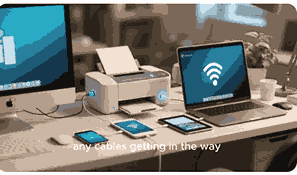
Connecting a printer to a Mac is an essential task for anyone who wants to print documents, photos, or business files with ease. Many Mac users search for the best ways to set up printers, whether they are using wireless printers, USB printers, or network-based devices. Understanding how to connect a printer to a Mac allows for smooth operations and avoids common printing issues that may arise from compatibility or setup challenges. In this guide, you will learn the step-by-step process of connecting a printer to macOS devices, exploring wireless and USB setups, driver installations, AirPrint functionality, and troubleshooting tips to make your Mac printing experience seamless.
What Is A Printer?
A printer is an electronic output device that converts digital files into physical, printed materials on paper. Printers come in many forms, including inkjet printers, laser printers, photo printers, wireless printers, and multifunction printers that also scan, copy, and fax. In modern computing, printers are designed to connect easily with computers, laptops, tablets, and smartphones through USB cables, Wi-Fi networks, Bluetooth, or Ethernet connections. Printers can be used in homes, offices, schools, and businesses to produce text documents, colored images, marketing flyers, or professional reports. For Mac users, Apple’s operating system macOS provides built-in printing support through AirPrint technology and printer drivers, making it simple to connect and configure most modern printers without requiring complex installations.
Understanding Printer Compatibility With macOS
When connecting a printer to a Mac, compatibility is an important factor. Not all printers are designed to work seamlessly with macOS, and some may require driver downloads from the manufacturer. Apple devices often support AirPrint-enabled printers without needing additional software, allowing wireless and USB printers to be recognized instantly. Checking the printer specifications before purchase ensures that the printer supports Mac connectivity. Additionally, macOS updates frequently include improved printer compatibility, so keeping your system updated helps ensure stable printing performance. Users must also verify that older printers have updated drivers for newer macOS versions to avoid printing errors or connectivity problems.
Steps To Connect A Printer To A Mac Using USB
One of the simplest ways to connect a printer to a Mac is through a USB cable. To begin, turn on the printer and plug the USB cable into both the printer and the Mac. Once connected, macOS automatically detects the printer and may install the necessary drivers. If prompted, follow on-screen instructions to complete the setup. After installation, open “System Settings” or “System Preferences” and navigate to “Printers & Scanners.” The connected printer should appear in the list, ready for use. If it does not appear, click the “+” button to add the printer manually. This method is ideal for users who prefer a reliable wired connection without dealing with network configurations.
Connecting A Wireless Printer To A Mac
Wireless printing allows users to print without connecting cables, offering greater flexibility. To connect a wireless printer to a Mac, first ensure that the printer is powered on and connected to the same Wi-Fi network as the Mac. Next, go to “System Settings” or “System Preferences” on the Mac and select “Printers & Scanners.” Click the “+” button and choose the wireless printer from the list of available devices. If the printer supports AirPrint, macOS will configure it automatically. For printers that require drivers, download the software from the manufacturer’s website. Wireless connectivity is convenient for homes and offices where multiple users need to share the same printer without dealing with physical cable connections.
Using AirPrint On A Mac
Apple’s AirPrint technology simplifies the printing process by allowing users to print directly from a Mac without installing additional drivers. Most modern printers support AirPrint, making them instantly compatible with macOS. To use AirPrint, ensure that the Mac and printer are connected to the same Wi-Fi network. Then, add the printer through “Printers & Scanners.” Once connected, you can print documents, photos, or emails directly from any macOS application. AirPrint also supports advanced features like double-sided printing, adjusting print quality, and paper size selection. Since AirPrint is built into macOS, it eliminates the need for third-party drivers and provides seamless integration with iPhones, iPads, and other Apple devices in the same network.
Troubleshooting Printer Connection Issues On A Mac
Sometimes, users may face difficulties when connecting a printer to a Mac. Common issues include printers not appearing in “Printers & Scanners,” failed print jobs, or connection errors. To resolve these, ensure that both the printer and Mac are updated with the latest firmware and macOS version. Restart both devices to refresh their connection. For wireless printers, confirm that both devices are on the same Wi-Fi network. If the problem persists, remove the printer from the settings and re-add it. For USB printers, try using a different USB port or cable. If drivers are outdated, download the latest version from the manufacturer’s website. Following these steps usually resolves most Mac printing problems.
Setting A Default Printer On A Mac
When using multiple printers, setting a default printer saves time and avoids confusion. On a Mac, navigate to “Printers & Scanners” in “System Settings” or “System Preferences.” From the printer list, right-click or select the printer you want as the default and choose “Set Default Printer.” This ensures that all print jobs go to the selected printer unless you manually change it during printing. If you frequently switch between printers, you can also select “Last Printer Used” to automatically use the most recently chosen printer. Setting a default printer improves productivity and reduces mistakes, especially in offices or workspaces where multiple devices are available.
Printing From Cloud Services On A Mac
Cloud printing offers the ability to print from cloud storage platforms such as Google Drive, Dropbox, or iCloud directly on a Mac. Many modern printers support cloud integration, enabling remote printing even if you are not connected to the same Wi-Fi network. To use cloud printing, register the printer with the manufacturer’s cloud service and install any required applications on your Mac. Once linked, you can send documents from your Mac or even from your iPhone or iPad to the printer. This is especially useful for businesses, students, and professionals who need to access and print documents from multiple locations without relying solely on physical USB or Wi-Fi connections.
Conclusion
Connecting a printer to a Mac can be simple and efficient when the correct steps are followed. Whether you are using a USB printer, wireless printer, or AirPrint-enabled device, macOS offers multiple solutions to make printing smooth and reliable. Understanding printer compatibility, setting up drivers, troubleshooting issues, and configuring default printers all contribute to a better user experience. With proper setup and maintenance, Mac users can enjoy seamless printing from their devices for personal, academic, or business use.
Frequently Asked Questions
1. How Do I Connect A Printer To A Mac?
To connect a printer to a Mac, begin by turning on the printer and ensuring it is either connected via USB cable or available on the same Wi-Fi network as the Mac. For USB printers, plug the cable into the Mac, and macOS will detect the printer automatically. If drivers are needed, macOS may prompt you to install them or you can download them from the printer manufacturer’s website. For wireless printers, go to “System Settings” or “System Preferences,” select “Printers & Scanners,” click the “+” button, and choose your printer from the list. If the printer supports AirPrint, macOS configures it instantly. Once added, you can begin printing documents and photos directly from your Mac.
2. How Do I Install Printer Drivers On A Mac?
Installing printer drivers on a Mac is straightforward. Many printers work automatically with macOS through AirPrint, but some models require drivers from the manufacturer. Start by connecting your printer to the Mac via USB or Wi-Fi. If macOS does not automatically detect it, visit the printer manufacturer’s official website and search for macOS drivers for your specific printer model. Download and install the driver package, following on-screen instructions. After installation, return to “Printers & Scanners” in “System Settings” or “System Preferences” to add the printer. The driver ensures your printer can access advanced features like duplex printing and color calibration. Always download drivers from trusted sources to avoid compatibility problems.
3. How Do I Connect A Wireless Printer To My Mac?
To connect a wireless printer to your Mac, first make sure the printer is turned on and connected to the same Wi-Fi network as your computer. Next, go to “System Settings” or “System Preferences” and open “Printers & Scanners.” Click the “+” button to add a new device, and select your wireless printer from the list of available printers. If the printer supports AirPrint, macOS will automatically configure it without additional drivers. For non-AirPrint printers, you may need to install the manufacturer’s drivers to enable all features. Once installed, test the connection by printing a document. Wireless printers provide convenience by eliminating cables and allowing multiple users to share the same device.
4. How Do I Use AirPrint On A Mac?
Using AirPrint on a Mac is very simple because it requires no additional drivers. First, ensure that your Mac and printer are both connected to the same Wi-Fi network. Then, open “Printers & Scanners” from “System Settings” or “System Preferences” and click the “+” button to add the printer. If your printer supports AirPrint, macOS will recognize and configure it automatically. Once added, you can print documents, photos, and web pages directly from any application. AirPrint supports key features such as duplex printing, quality adjustments, and paper size options. Because it is built into macOS, AirPrint ensures fast setup, compatibility, and a smooth user experience across Apple devices.
5. How Do I Troubleshoot Printer Connection Problems On A Mac?
If your printer does not connect to your Mac, begin by checking whether the printer is powered on and properly connected via USB or Wi-Fi. Restart both the printer and Mac to refresh connections. For wireless printers, confirm that both devices are on the same Wi-Fi network. If the printer still does not appear in “Printers & Scanners,” remove it and re-add it using the “+” button. Updating macOS and printer firmware often fixes compatibility issues. For USB printers, try another cable or port. If drivers are outdated, download the latest version from the manufacturer’s website. These troubleshooting steps resolve most issues, ensuring reliable printer connectivity.
6. How Do I Set A Default Printer On A Mac?
To set a default printer on a Mac, go to “System Settings” or “System Preferences” and select “Printers & Scanners.” From the list of available printers, choose the one you want as your default. Right-click on it or select it and then choose “Set Default Printer.” Once set, all future print jobs will automatically use this printer unless you manually select another one. If you regularly switch printers, you can set the option to “Last Printer Used,” which makes macOS select the most recently used device. Setting a default printer is especially useful in offices or shared spaces where multiple printers are available, saving time and reducing printing mistakes.
7. How Do I Print From Cloud Services On A Mac?
Printing from cloud services on a Mac allows you to access and print files stored on platforms like Google Drive, iCloud, or Dropbox. To do this, first ensure your printer supports cloud printing and is connected to the internet. Then, install any required software or applications provided by the manufacturer to enable cloud functionality. Once configured, you can log into your cloud storage on your Mac and send documents directly to the printer. Some printers also allow remote printing from mobile devices linked to the same cloud account. This is convenient for professionals, students, and businesses needing access to important documents without manually transferring files between devices.
8. How Do I Update Printer Drivers On A Mac?
Updating printer drivers on a Mac is important to maintain compatibility and performance. First, check if macOS updates include printer driver updates by going to “System Settings” and selecting “Software Update.” If a new version is available, install it. For printers that require manufacturer-specific drivers, visit the official website of the printer brand, enter your model number, and download the latest driver compatible with your version of macOS. Once installed, restart your Mac and printer to apply changes. Updated drivers help improve printing speed, fix bugs, and unlock advanced features. Regularly updating drivers ensures smooth performance and prevents connection or compatibility issues.
9. How Do I Connect An Older Printer To A Mac?
Connecting an older printer to a Mac may require additional steps because not all legacy printers support AirPrint or modern macOS versions. Start by checking whether the manufacturer still provides drivers for macOS. If available, download and install the driver package. If drivers are unavailable, macOS may still recognize the printer as a generic printer, but advanced features may not work. You can connect via USB for more reliability since wireless functions may not be supported. Some users can also use third-party printing software as a workaround. Although older printers may lack certain features, with the right setup, they can still function effectively with a Mac.
10. How Do I Add A Printer To Printers & Scanners On A Mac?
To add a printer in “Printers & Scanners” on a Mac, first ensure the printer is connected via USB or Wi-Fi. Open “System Settings” or “System Preferences,” then navigate to “Printers & Scanners.” Click the “+” button at the bottom of the printer list. A window will appear showing available printers on the network or connected via USB. Select your printer and click “Add.” If your printer supports AirPrint, macOS will configure it automatically. Otherwise, you may be asked to install drivers. Once added, the printer will appear in the list and be ready for printing. This process is quick and ensures your Mac recognizes the printer properly.
11. How Do I Print Wirelessly From A Mac?
Printing wirelessly from a Mac is convenient and eliminates the need for cables. First, ensure that both your Mac and printer are connected to the same Wi-Fi network. Then, open the document, photo, or webpage you want to print and select “Print” from the menu. In the printer selection menu, choose your wireless printer. If your printer is already added through “Printers & Scanners,” it will appear in the list. If not, you can add it by clicking the “+” button. Wireless printing works best with AirPrint-enabled devices but can also work with printers using manufacturer drivers. This method simplifies printing in homes, offices, and shared networks.
12. How Do I Connect A Bluetooth Printer To A Mac?
Some printers support Bluetooth connectivity, allowing them to pair directly with a Mac. To connect a Bluetooth printer, first enable Bluetooth on your Mac through “System Settings.” Then, ensure that your printer’s Bluetooth feature is activated. On your Mac, go to “Bluetooth Preferences” and search for nearby devices. Select the printer from the list and pair it. Once paired, open “Printers & Scanners” in “System Settings” and click “+” to add the Bluetooth printer. After it appears in the list, you can set it up for printing. Although Bluetooth printing is less common than Wi-Fi or USB, it offers a wireless solution for short-distance printing.
13. How Do I Share A Printer Between Multiple Macs?
Sharing a printer between multiple Macs allows several users to access the same device without physically moving it. First, connect the printer to one Mac using USB or Wi-Fi. Then, enable printer sharing by going to “System Settings,” selecting “Sharing,” and turning on “Printer Sharing.” Choose the printer you want to share and allow access to other users. On another Mac, go to “Printers & Scanners” and click “+” to add the shared printer, which should appear automatically if both devices are on the same network. Printer sharing is efficient for offices, schools, and households with multiple Mac users who need printing access.
14. How Do I Print Double-Sided On A Mac?
Printing double-sided on a Mac helps save paper and is environmentally friendly. To do this, open the document you want to print and choose “Print” from the menu. In the print dialog box, look for the “Two-Sided” or “Duplex Printing” option. If the printer supports duplex printing, select the option and proceed with printing. If the feature does not appear, you may need to enable it in the printer driver settings or use manual duplexing by printing odd pages first, then reinserting the paper to print even pages. Duplex printing is supported by most modern printers and works seamlessly with macOS when drivers are correctly installed.
15. How Do I Connect A Network Printer To A Mac?
Connecting a network printer to a Mac is useful in office environments where printers are connected to Ethernet or Wi-Fi networks. To connect, first ensure that the printer is connected to the same network as the Mac. Then, go to “Printers & Scanners” in “System Settings” and click the “+” button. Select the network printer from the list of available devices. If the printer does not appear, you may need to add it manually using its IP address. Enter the address and select the appropriate driver or AirPrint option. Once added, you can print from any application. Network printers allow multiple users to share one device efficiently.
16. How Do I Remove A Printer From A Mac?
To remove a printer from a Mac, open “System Settings” or “System Preferences” and select “Printers & Scanners.” From the list of installed printers, select the one you want to remove. Click the “–” button at the bottom of the list and confirm the deletion. Removing a printer is helpful when you no longer use the device, or if you want to reset its settings before reinstalling. After removal, the printer will no longer appear as an option when printing. This process helps declutter your printer list and ensures that only active, functional printers are available for selection on your Mac.
17. How Do I Print Photos From A Mac?
Printing photos from a Mac allows you to create high-quality physical copies of your digital images. Start by opening the photo in the “Preview” app or the “Photos” app. Select “File” and then “Print.” Choose your printer from the list of available devices. Adjust settings such as paper size, photo orientation, and quality for the best results. If your printer supports borderless printing, select that option for full-page photos. You can also use third-party photo editing software for advanced adjustments before printing. For professional results, use photo paper designed for your printer type. macOS supports photo printing with most AirPrint-enabled or driver-installed printers.
18. How Do I Scan Using A Printer On A Mac?
If your printer is a multifunction device, you can use it to scan documents directly into your Mac. To scan, go to “System Settings” and open “Printers & Scanners.” Select your multifunction printer from the list and click the “Scan” tab. Choose “Open Scanner” to access the scanning interface. Place the document on the scanner bed or feeder, adjust settings such as resolution, file format, and destination, then click “Scan.” The scanned file will appear on your Mac in the chosen folder. Scanning from a printer to a Mac is efficient for saving digital copies of physical documents, business cards, or personal records.
19. How Do I Print From Microsoft Word On A Mac?
Printing from Microsoft Word on a Mac is simple and works just like printing from other applications. Open your Word document and select “File” from the top menu, then click “Print.” From the printer list, select the device you want to use. Adjust options such as page range, number of copies, and double-sided printing. Once your settings are correct, click “Print” to begin. Microsoft Word on macOS integrates seamlessly with most printers, especially AirPrint-enabled devices. If advanced settings are missing, ensure that the proper drivers are installed. Word also allows you to print with templates, custom layouts, and high-quality graphics for professional documents.
20. How Do I Fix Printing Errors On A Mac?
When printing errors occur on a Mac, the first step is to check if the printer is turned on and properly connected. Restarting both the printer and Mac often resolves minor issues. For wireless printers, confirm that both devices are connected to the same Wi-Fi network. If the error persists, try removing the printer from “Printers & Scanners” and re-adding it. Check for pending software updates in macOS and install the latest printer drivers. If print jobs remain stuck in the queue, clear the print queue and try again. Many printing errors are caused by outdated drivers or poor connections, but troubleshooting fixes them quickly.
FURTHER READING
- How To Add A Printer To Your Computer | Easy Step-By-Step Guide To Connect Printers To Computers
- What Is The Best Printer For My Needs? | A Complete Guide To Choosing The Right Printer For Your Needs
- How To Connect A Printer To A Tablet | Easy Guide To Printing From Tablets For Better Productivity
- Why Your Printer Print Slowly | Common Causes, Fixes, And Speed Optimization Tips
- How To Print From Your Phone To A Printer | Easy Wireless And Mobile Printing Guide
- What Is The Difference Between An Inkjet Printer And A Laser Printer? | Inkjet Vs Laser Printer Comparison, Pros And Cons, Buying Guide
- How To Update Your Printer Firmware | A Step-By-Step Guide For Better Printing Performance
- How To Share A Printer On A Network | Easy Printer Sharing Setup For Windows, Mac, And Wireless Networks
- How To Reset Your Printer | Easy Printer Reset Guide For All Models
- How Long Does A Printer Last? | Printer Lifespan, Maintenance, And Durability Guide