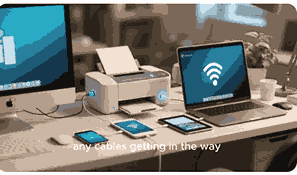
Printers play a critical role in both homes and offices, but they can sometimes run into problems that require a reset. Learning how to reset a printer properly can solve common issues like error codes, unresponsive systems, slow printing, or wireless connectivity failures. Resetting restores the device to its default settings, clears temporary glitches, and helps improve performance. Whether you are using an inkjet, laser, or wireless printer, understanding the correct reset methods will save you time, reduce frustration, and prolong the life of your machine. This guide will explain what a printer is, why resetting is necessary, types of printer resets, and step-by-step instructions to make the process easier.
What Is A Printer?
A printer is an electronic device that converts digital documents, images, or files from a computer, smartphone, or tablet into physical copies on paper. Modern printers are available in different types, including inkjet, laser, dot matrix, and multifunction models that combine printing, scanning, and copying. Printers can be connected using USB cables, Ethernet, or wireless technologies like Wi-Fi and Bluetooth. With built-in software and drivers, they communicate with operating systems to process printing tasks. Over time, printers may develop issues such as paper jams, ink errors, or network disconnections, which often require troubleshooting. One of the most effective solutions is to reset the device to restore it to its original working condition.
Why Do Printers Need To Be Reset?
Printers need to be reset when they malfunction due to software glitches, corrupted settings, or hardware errors. A reset clears temporary memory, refreshes the system, and restores factory configurations. This helps fix problems like printer not responding, showing persistent error codes, or refusing to connect to Wi-Fi. Resetting also helps after replacing ink cartridges or performing maintenance tasks. For wireless printers, a network reset may resolve issues where the device is not detected by a computer. Essentially, a reset acts as a troubleshooting solution before seeking technical repairs, making it one of the most practical steps in printer problem-solving.
Types Of Printer Resets
Different printers require different types of resets depending on the problem. The main categories include soft reset, hard reset, network reset, and factory reset. A soft reset is the simplest, often involving turning the printer off and on to refresh memory. A hard reset clears stored jobs and settings. Network resets help restore wireless or Ethernet connectivity, while factory resets return the printer to its original factory configuration. Each type addresses specific problems and should be applied carefully to avoid losing important custom settings. Knowing which reset method to use ensures faster troubleshooting and more reliable performance.
How To Perform A Soft Reset On A Printer
A soft reset is the easiest and safest way to refresh a printer. To perform it, turn off the printer completely and unplug it from the power source. Leave it disconnected for about 60 seconds to allow the system to discharge and clear temporary memory. After that, reconnect the power cable, switch on the printer, and allow it to initialize. This process often resolves minor glitches such as freezing, unresponsiveness, or printing delays. Soft resets are recommended as the first step in troubleshooting because they do not erase settings, Wi-Fi configurations, or stored preferences, making them safe for all users.
How To Perform A Hard Reset On A Printer
A hard reset goes beyond a soft reset by clearing stored printing jobs and temporary system data. To perform it, turn off the printer, unplug the power cable, and hold down the power button for at least 15 to 20 seconds. Some printer models may also require pressing a specific button combination, such as “Power” and “Cancel,” to execute the reset. Afterward, plug the printer back in and restart it. This process clears memory buffers and removes unfinished print jobs that may cause repeated errors. A hard reset is particularly useful for printers stuck in error loops or refusing to print.
How To Reset Printer Network Settings
Network issues are among the most common reasons printers fail to work correctly. Resetting printer network settings clears saved Wi-Fi connections, allowing you to reconnect fresh. For most models, navigate through the printer’s control panel menu and locate the network or wireless settings option. Select “Restore Network Defaults” or a similar command. Once reset, reconnect your printer to the desired Wi-Fi network by re-entering your password. This process helps resolve problems like printers disappearing from available devices, connection timeouts, or IP address conflicts. After resetting, always update the printer driver and ensure your router is working properly for best results.
How To Perform A Factory Reset On A Printer
A factory reset restores the printer to its original manufacturer settings, erasing all customizations and stored data. To perform this, access the printer’s settings menu and select “Restore Factory Settings” or a similar option. On some models, pressing and holding certain button combinations during startup initiates the reset. Once completed, the printer will reboot as if it were brand new. While this method effectively resolves persistent issues like repeated error codes, corrupted software, or major connectivity failures, it also deletes Wi-Fi settings, paper size adjustments, and personalized preferences. A factory reset should be used as a last resort.
How To Reset Ink Cartridge Settings
Sometimes, printers fail to recognize newly installed ink cartridges. Resetting ink cartridge settings can help solve this issue. Start by turning off the printer and removing the cartridge. Clean the contacts gently with a lint-free cloth before reinserting it. If the error persists, hold down the “Resume” or “OK” button for a few seconds to reset cartridge recognition. Some printer brands also allow cartridge reset through software drivers installed on the computer. This process ensures the printer accepts both original and compatible cartridges, helping avoid interruptions during printing. Always ensure cartridges are properly seated and free from dust or debris.
How To Reset A Wireless Printer
Wireless printers depend on stable connections, and a reset often fixes network failures. To reset, access the control panel and navigate to wireless or network settings. Choose the option to “Restore Network Defaults” and then reconnect to your Wi-Fi by entering the password. For routers with WPS (Wi-Fi Protected Setup), pressing the WPS button allows automatic reconnection. If problems persist, restart both the printer and the router to refresh the connection. Resetting a wireless printer is essential when switching to a new network, updating a router, or troubleshooting devices that fail to detect the printer on the network.
Printer Reset Precautions
While resetting is useful, it should be done carefully. Always back up your settings if your printer allows it, especially for business use where specific network or driver configurations are needed. Avoid frequent factory resets as they may wear down system memory and erase important preferences. Ensure cartridges and paper trays are correctly installed before resetting to prevent hardware issues. Additionally, consult your printer’s user manual or manufacturer website for model-specific instructions. Incorrect resets can sometimes cause more harm than good, so always proceed with the right method for the issue you are trying to fix.
Conclusion
Resetting a printer is one of the most effective solutions to resolve errors, unresponsiveness, and connectivity failures. Whether through a soft reset, hard reset, network reset, or full factory reset, users can restore their devices to proper working condition without needing technical assistance. Knowing how to reset specific components like wireless settings or ink cartridges further enhances troubleshooting. By following the right reset procedures, users can save time, extend the life of their printer, and improve efficiency at home or in the office.
Frequently Asked Questions
1. How Do I Reset My Printer?
Resetting your printer depends on the problem you are experiencing. A soft reset involves turning the printer off, unplugging it, waiting for about 60 seconds, and then turning it back on. This clears temporary glitches. A hard reset requires holding down the power button or a button combination to clear stored data. For wireless issues, use the control panel to restore network defaults before reconnecting to Wi-Fi. A factory reset restores the printer to its original settings but deletes all customizations. Always consult your printer manual for model-specific instructions to ensure you reset it correctly and avoid unnecessary complications.
2. How Do I Perform A Soft Reset On My Printer?
To perform a soft reset, switch off the printer and unplug it from the power source. Wait at least 60 seconds to allow the internal memory to clear. Plug the printer back in, power it on, and let it reinitialize. This process resolves minor errors, such as unresponsiveness or slow performance. A soft reset is the simplest reset method because it does not delete Wi-Fi configurations, installed drivers, or stored preferences. It is an ideal first step when troubleshooting printer problems before trying more advanced reset options like network reset or factory reset.
3. How Do I Perform A Hard Reset On My Printer?
A hard reset clears stored printing jobs and memory buffers. To perform it, turn off the printer, unplug it, and press and hold the power button for 15 to 20 seconds. Some models require pressing a combination such as “Power” and “Cancel.” Reconnect the printer to the power source and turn it back on. This method is effective for fixing persistent error messages, frozen operations, or incomplete print jobs. It is more advanced than a soft reset, so use it when your printer fails to respond to basic troubleshooting methods. Always refer to the user manual for guidance.
4. How Do I Reset My Printer To Factory Settings?
A factory reset returns the printer to its original manufacturer settings, erasing all saved preferences, Wi-Fi connections, and configurations. To perform it, access the printer’s menu via its control panel and locate the option for “Restore Factory Settings.” On certain models, holding specific button combinations during startup initiates the reset. Once completed, the printer restarts as though it were new. Use this method only as a last resort when other reset techniques fail, since it wipes out all customizations. Always back up important settings or take note of your configurations before performing a factory reset.
5. How Do I Reset My Wireless Printer?
Resetting a wireless printer involves clearing its network settings and reconnecting it to Wi-Fi. From the control panel, access wireless or network settings and choose “Restore Network Defaults.” Reconnect the printer by selecting your Wi-Fi network and re-entering the password. If your router supports WPS, press the WPS button to connect automatically. If issues persist, restart both the printer and router to refresh the connection. Resetting helps resolve problems where the printer is not detected, repeatedly disconnects, or cannot connect to new networks. Ensure your Wi-Fi signal is strong for a stable wireless printing experience after the reset.
6. How Do I Reset Printer Ink Cartridge Recognition?
Printers sometimes fail to recognize new or refilled ink cartridges. To reset recognition, turn off the printer and remove the cartridge. Gently clean the metal contacts with a lint-free cloth, then reinsert it firmly. Restart the printer and hold down the “Resume” or “OK” button for several seconds. This action forces the system to recheck cartridge status. Some printer software also allows a reset via the installed drivers. This process resolves cartridge error messages, ensuring smooth operation. Always check that you are using compatible cartridges, as unsupported or defective ones may not reset even after multiple attempts.
7. How Do I Reset My Printer Network Settings?
To reset printer network settings, go to the control panel menu and select “Network” or “Wireless” options. Choose “Restore Network Defaults” or equivalent commands. After resetting, reconnect your printer to the desired Wi-Fi network by entering the correct password. If necessary, use the WPS button on your router for automatic pairing. This reset is particularly useful when switching internet providers, upgrading routers, or fixing connectivity failures. Once completed, reinstall or update printer drivers on your computer for smooth operation. Resetting network settings ensures that the printer reconnects seamlessly to your network environment without persistent connection errors.
8. How Do I Reset A Printer That Is Not Responding?
If your printer is not responding, begin with a soft reset by powering it off, unplugging it for one minute, and restarting it. If the issue persists, perform a hard reset by holding down the power button while unplugged. For network printers, reset wireless settings and reconnect to Wi-Fi. If the device is still unresponsive, a factory reset may be necessary. Also check cables, ink levels, and drivers, since these can contribute to failures. Resetting usually clears software or memory errors that cause the printer to freeze. If resets fail, the problem may require professional servicing or hardware replacement.
9. How Do I Reset A Printer After Paper Jam Errors?
Paper jams often leave behind error messages even after clearing the paper. Resetting the printer helps remove these residual errors. Start with a soft reset by unplugging the machine for about 60 seconds before restarting it. If the error persists, perform a hard reset to clear memory buffers. For some models, opening and closing the cartridge or paper tray also resets sensors. A factory reset may be necessary if repeated paper jam warnings occur despite fixing the issue. Always ensure paper is properly loaded, not wrinkled, and compatible with your printer to avoid recurring jam-related errors.
10. How Do I Reset A Printer With Error Codes?
Printers display error codes when specific problems occur, such as cartridge issues, connectivity failures, or hardware malfunctions. Resetting clears these errors. Begin with a soft reset to refresh memory. If the code remains, try a hard reset or restore network settings for wireless printers. A factory reset can resolve persistent or unknown errors by restoring default configurations. Check your printer manual or manufacturer’s website to interpret error codes correctly, as some may require additional troubleshooting beyond resets. Resetting is an effective way to remove error codes caused by temporary glitches without needing technical repairs or replacements.
11. How Do I Reset My Printer When It Stops Printing?
If your printer stops printing, resetting may restore functionality. First, perform a soft reset by turning it off, unplugging, and waiting before restarting. If that does not work, do a hard reset to clear stalled jobs. For wireless printers, reset the network settings and reconnect to Wi-Fi. If the issue persists, attempt a factory reset to erase corrupted settings. Always check ink levels, paper availability, and driver installations before and after resetting. Resetting often helps when print jobs are stuck in the queue or when the printer refuses to respond to new printing commands.
12. How Do I Reset My Printer After Replacing Cartridges?
After installing new ink cartridges, some printers fail to detect them. Resetting resolves this recognition issue. Start by turning off the printer and removing the cartridges. Clean their contacts and reinsert them firmly. Restart the printer and hold down the “Resume” or “OK” button for several seconds. If problems persist, perform a soft reset, followed by a hard reset if needed. Some printer software allows users to reset cartridge information directly from the driver settings. This process ensures that your printer correctly identifies fresh cartridges and avoids unnecessary error messages, allowing you to resume smooth printing.
13. How Do I Reset My Printer After Changing Wi-Fi?
When you change your Wi-Fi router or password, your printer may fail to connect. To fix this, reset the printer’s network settings from its control panel menu by selecting “Restore Network Defaults.” Once reset, search for available networks and re-enter your new Wi-Fi password. Alternatively, use the WPS button on the router for a quick connection. Restart both the router and the printer to finalize the process. Resetting ensures that the printer connects properly to the updated network, eliminating connection errors and allowing wireless printing to continue without interruption on the new internet setup.
14. How Do I Reset A Printer To Clear Print Queue Errors?
Print queue errors occur when jobs get stuck in memory, preventing new tasks from being processed. Resetting clears these errors effectively. Start with a hard reset by turning off the printer, unplugging it, and holding the power button for about 20 seconds. Restart the printer to refresh memory. Additionally, clear the print queue manually from your computer by canceling all jobs. A factory reset may be necessary if jobs keep getting stuck. By resetting, the printer can process new print requests smoothly, avoiding repeated stoppages caused by incomplete or corrupted documents in the system memory.
15. How Do I Reset My Printer If It Loses Connection?
Printers can lose connection to computers or networks due to signal interruptions or corrupted settings. Resetting the device helps restore communication. Perform a soft reset first to refresh the system. If using a wireless printer, reset the network settings and reconnect to Wi-Fi. For wired printers, check the USB or Ethernet cable before resetting. If the issue persists, a factory reset restores default configurations. This process removes connection-related errors and allows the printer to establish new links with devices. Resetting is especially useful after network changes, router replacements, or system updates that disrupt printer connectivity.
16. How Do I Reset My Printer To Improve Performance?
Over time, printers may slow down or become less responsive. Resetting refreshes the system and improves performance. A soft reset clears temporary memory, while a hard reset removes unfinished jobs and memory blocks. For wireless models, resetting the network settings eliminates connectivity delays. A factory reset provides the most comprehensive solution by restoring all configurations to their defaults. Resetting can improve print speed, accuracy, and responsiveness, making it a valuable step when maintaining long-term printer efficiency. Always combine resets with regular maintenance, such as cleaning cartridges and updating drivers, to maximize performance improvements.
17. How Do I Reset A Printer After Firmware Update Issues?
Firmware updates sometimes cause printers to malfunction due to compatibility issues or installation errors. Resetting helps restore functionality. Perform a soft reset immediately after the update to clear temporary glitches. If errors persist, try a hard reset to remove corrupted data. A factory reset may be required to roll back incompatible settings and restore default functionality. After resetting, reinstall or update drivers on your computer to ensure smooth operation. Resetting after firmware issues prevents system crashes, ensures compatibility, and restores printing functions without requiring professional intervention. Always verify updates from official manufacturer websites.
18. How Do I Reset My Printer For Wireless Printing Errors?
Wireless printing errors often arise from weak signals, outdated drivers, or corrupted settings. Resetting resolves these problems effectively. Access the printer’s control panel, navigate to wireless settings, and choose “Restore Network Defaults.” Reconnect by re-entering your Wi-Fi password or using the WPS button on your router. Restart both printer and router for a fresh connection. If issues persist, perform a soft or hard reset before attempting a full factory reset. Resetting ensures seamless wireless communication between devices, enabling smooth and uninterrupted printing. Always place your printer within range of the Wi-Fi router for optimal wireless performance.
19. How Do I Reset My Printer After A Power Outage?
Power outages can cause printers to malfunction, leaving error messages or stopping them mid-task. Resetting restores the system. Perform a soft reset by unplugging the printer for at least one minute, then restarting it. If it still malfunctions, try a hard reset by holding the power button. Network printers may need a wireless reset to reconnect properly after power restoration. A factory reset may be necessary for persistent errors. Resetting after a power outage clears corrupted memory and reinitializes the printer, ensuring it functions normally again. Always use surge protectors to safeguard printers from electrical disturbances.
20. How Do I Reset My Printer If It Keeps Freezing?
If your printer keeps freezing, resetting is the best troubleshooting method. Start with a soft reset by unplugging the device for 60 seconds before restarting it. If the problem persists, perform a hard reset to clear memory buffers. For wireless models, reset the network settings to ensure proper communication. A factory reset may be required to eliminate deep system errors. Resetting clears frozen processes and allows the printer to function normally again. Combine resets with driver updates and proper maintenance to reduce recurring freezes. This ensures smooth printing operations without interruptions or frequent troubleshooting.
FURTHER READING
- How Long Does A Printer Last? | Printer Lifespan, Maintenance, And Durability Guide
- What Is A 3D Printer? | Definition, Types, Uses, Benefits, Of 3D Printing Technology Explained
- What Is A Dot Matrix Printer? | Definition, Meaning, Uses, Benefits, And Limitations
- What Is An Inkjet Printer? | Definition, Features, Types, Benefits, Uses, And Inkjet PrinterBuying Guide
- What Is A Laser Printer? | Definition, Meaning, Types, Benefits, Uses, Features, And Laser Printing Technology
- What Is A Wireless Printer? | Understanding Features, Benefits, And How Wireless Printers Work
- How To Fix A Printer Paper Jam | Easy Troubleshooting Guide For Smooth Printing
- Why Is My Printer Not Printing? | Common Printer Problems And Easy Fixes For Printing Issues
- How To Install A Printer Driver | A Step-By-Step Printer Driver Installation Guide
- Which Printer Is Best For Office Use? | A Complete Guide To Choosing The Best Office Printer For Your Business Needs