

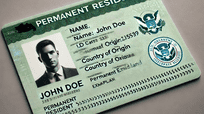
Learning how to apply for a green card is one of the most important steps in securing permanent residency in the United States. Whether you’re seeking a green card through family, employment, asylum, or another category, understanding the full application process will significantly improve your chances of success. This comprehensive guide on how to apply for a green card will walk you through every critical step and requirement. From eligibility to filing forms, interviews, and final approval, this article will serve as your complete roadmap on how to apply for a green card legally and successfully.
What Is A Green Card?
A green card, officially known as a Permanent Resident Card, is an identification card that proves an individual has lawful permanent resident status in the United States. Holding a green card allows a non-citizen to live and work permanently in the U.S. It is also the first step toward full U.S. citizenship for many immigrants. Understanding how to apply for a green card starts with knowing what a green card actually is and how it differs from other types of visas. A green card can be obtained through various avenues such as family sponsorship, employment, refugee or asylee status, and the diversity visa lottery.
Types Of Green Cards You Can Apply For
There are several categories available when considering how to apply for a green card, each with different requirements and processes:
Family-Based Green Cards
This is one of the most common ways to apply. U.S. citizens or permanent residents can sponsor certain family members. Immediate relatives like spouses, children, and parents usually receive priority.
Employment-Based Green Cards
Applicants with specific job offers, skills, or exceptional talents may qualify under employment-based categories. These include EB-1 through EB-5 classifications.
Diversity Visa Lottery Program

Also known as the Green Card Lottery, this program offers a limited number of green cards to people from countries with low immigration rates to the U.S.
Refugee Or Asylee Status
Individuals granted asylum or refugee status can apply for a green card one year after being admitted to the U.S. under such status.
Special Immigrant Categories
These include religious workers, Afghan or Iraqi nationals who supported U.S. missions, and other unique groups recognized under U.S. immigration law.
Green Card Eligibility Requirements
Understanding eligibility is crucial when learning how to apply for a green card. Eligibility depends on the category under which you are applying. Common general requirements include:
- A qualifying relationship with a U.S. citizen or lawful permanent resident (for family-based applications)
- A valid job offer or employment-based petition (for work-based applications)
- Meeting medical and criminal background checks
- Entering the U.S. legally and maintaining lawful status if applying from within the country
Each category has its own specific guidelines, so it’s essential to check the eligibility criteria associated with your chosen application path.
Required Documents For A Green Card Application
A complete application is essential when considering how to apply for a green card. Missing documents can result in delays or denials. Standard required documents include:
- Proof of eligibility (such as a family relationship or employment offer)
- Government-issued identification
- Birth certificate
- Passport photos
- Form I-864 (Affidavit of Support)
- Form I-693 (Medical Examination Report)
- Form I-485 (Application to Register Permanent Residence or Adjust Status)
The exact documentation varies depending on your green card category.
Steps On How To Apply For A Green Card
The process for how to apply for a green card involves multiple steps. The following is a simplified overview:
Step 1: Determine Your Eligibility Category
Identify the category under which you’re applying—family, employment, asylum, or diversity lottery. This defines the forms and process you’ll follow.
Step 2: File An Immigrant Petition
An eligible sponsor (family member or employer) must usually file a petition (such as Form I-130 or Form I-140) on your behalf.
Step 3: Wait For USCIS Approval And A Visa Number
Once the petition is approved, you must wait for a visa number if one is required under your category. This is especially common for family and employment-based applications.
Step 4: File Form I-485 Or Apply Through Consular Processing
If you are in the U.S., file Form I-485 to adjust your status. If you are outside the U.S., apply for an immigrant visa through consular processing at a U.S. embassy or consulate.
Step 5: Attend Biometrics Appointment
You will receive an appointment to provide fingerprints, a photograph, and a signature for background checks.
Step 6: Attend A Green Card Interview
You’ll be scheduled for an in-person interview where a USCIS officer will review your case. Be prepared to answer questions and provide original documents.
Step 7: Receive A Decision
If approved, your green card will be mailed to you. If denied, you may receive information on how to appeal or reapply.
Costs Involved In Applying For A Green Card
Understanding the costs is an important aspect of how to apply for a green card. Fees vary depending on your application type, but common charges include:
- Form I-130: $535
- Form I-485: $1,140 (plus $85 for biometrics)
- Medical exam: Varies by provider
- Attorney fees (if applicable): $1,000–$5,000
Make sure to check the current fee schedule on the USCIS website, as these rates can change.
Processing Time For Green Card Applications
Timelines can vary depending on your application type and USCIS workload. Generally, the processing time for how to apply for a green card ranges from several months to several years. Family-based applications can take 1 to 10 years depending on the relationship. Employment-based applications are generally quicker but still subject to quotas and processing delays.
Common Mistakes To Avoid When Applying For A Green Card
When focusing on how to apply for a green card, avoid the following errors to prevent delays or rejections:
- Incomplete forms or missing signatures
- Submitting incorrect fees
- Using expired or outdated forms
- Providing insufficient supporting documents
- Failing to attend scheduled appointments
Carefully reviewing your application before submission can help avoid these common pitfalls.
Green Card Renewal And Replacement
A green card is typically valid for 10 years. If yours is expired or lost, you must file Form I-90 to renew or replace it. While this isn’t part of the initial process of how to apply for a green card, it’s important to maintain valid documentation to prove your permanent resident status.
Benefits Of Having A Green Card
As you explore how to apply for a green card, it’s helpful to understand the advantages of being a lawful permanent resident:
- The right to live and work permanently in the U.S.
- Eligibility to sponsor relatives
- Access to federal benefits and financial aid
- Pathway to U.S. citizenship
- Protection under U.S. law
How To Apply For A Green Card Through Marriage
Marriage to a U.S. citizen or lawful permanent resident is a common path. To begin, your spouse must file Form I-130, and you’ll file Form I-485 if inside the U.S. or go through consular processing if abroad. You’ll be required to prove the legitimacy of your marriage with documentation such as joint bank accounts, leases, or photographs.
How To Apply For A Green Card From Outside The United States
If you are living abroad, how to apply for a green card involves consular processing. After USCIS approves your petition, it is forwarded to the National Visa Center (NVC). You’ll be contacted to submit additional documents and attend an interview at a U.S. consulate or embassy in your home country.
What To Expect During The Green Card Interview
Understanding the interview process is essential in learning how to apply for a green card. The interview usually includes questions about your background, eligibility, and purpose for seeking permanent residency. Bring original documents and be honest and prepared. Couples applying through marriage must be able to demonstrate the authenticity of their relationship.
How Long Does It Take To Get A Green Card After The Interview?
After your interview, a decision could come within a few weeks. In some cases, USCIS may need more evidence or take additional time to review your case. Monitoring your application status online can help you stay updated on any changes or next steps.
How To Check Your Green Card Application Status
Knowing where your case stands is crucial when understanding how to apply for a green card. You can check your application status using the receipt number on the USCIS Case Status Tracker online. You may also sign up for updates via email or text message.
What Happens After You Receive Your Green Card?
Once you receive your green card, you are a lawful permanent resident. You should always carry your card and renew it before it expires. You can now work freely, travel internationally (with some limitations), and eventually apply for U.S. citizenship if eligible.
When And How To Apply For U.S. Citizenship After Getting A Green Card
After learning how to apply for a green card, many applicants later pursue citizenship. Typically, you can apply after five years of permanent residency—or three years if married to a U.S. citizen—using Form N-400. You’ll need to pass a civics test, interview, and meet other naturalization requirements.
Conclusion
Mastering how to apply for a green card is key to building a secure and lawful future in the United States. From choosing the right category to filing the correct forms and attending interviews, every step must be handled carefully. This guide has detailed the full process of how to apply for a green card, helping you navigate this life-changing journey with confidence and clarity. Whether you’re applying through family, work, or humanitarian programs, being informed is your best tool for success.
Frequently Asked Questions
1. How Can I Apply For A Green Card?
To apply for a green card, you must first determine your eligibility under a specific category such as family, employment, refugee/asylee status, or the Diversity Visa Lottery. Once eligibility is confirmed, the process usually starts with a petition filed by a sponsor—either a family member or an employer. After the petition is approved by USCIS (U.S. Citizenship and Immigration Services), you will either adjust your status if you’re already in the U.S., or go through consular processing if you’re abroad. You must also complete Form I-485 (Application to Register Permanent Residence or Adjust Status), pay filing fees, submit supporting documents, attend a biometrics appointment, and undergo an interview. If approved, you’ll receive your green card by mail.
2. What Is The Process Of Applying For A Green Card?
The process of applying for a green card begins with identifying the correct immigrant category that fits your situation—such as family-based, employment-based, refugee/asylee, or other special programs. A petition (Form I-130 or I-140) is typically filed by your sponsor with USCIS. Once approved, your case may either move to adjustment of status (for applicants in the U.S.) or consular processing (for applicants abroad). You must file Form I-485 or DS-260, attend a biometrics appointment, go through an immigration interview, and await a final decision. If successful, you receive your green card. The timeline can vary greatly depending on your category, country of origin, and USCIS workload.
3. What Are The Procedures For Applying For A Green Card?
The procedures for applying for a green card start with establishing your eligibility under a qualifying category. A sponsor must usually file a petition—Form I-130 for family-based applications or Form I-140 for employment-based cases. After USCIS approves the petition, you either file Form I-485 to adjust your status in the U.S. or go through consular processing overseas by filing Form DS-260. You’ll submit required documents, undergo fingerprinting (biometrics), and attend an interview. You must also pass medical and background checks. Finally, if approved, USCIS or a U.S. consulate issues the green card, granting you lawful permanent residency in the United States.
4. What Are The Steps To Applying For A Green Card?
Applying for a green card typically involves these steps:
- Determine eligibility under a specific category (e.g., family or employment).
- Have a sponsor file the appropriate petition (Form I-130 or I-140).
- Wait for USCIS to approve the petition.
- Depending on your location, file either Form I-485 (adjustment of status in the U.S.) or DS-260 (consular processing abroad).
- Submit required supporting documents and fees.
- Attend a biometrics appointment.
- Complete an interview with USCIS or at a U.S. embassy or consulate.
- Receive a decision.
- If approved, your green card is issued, granting you permanent resident status.
5. How Do I Start Applying For A Green Card From Outside The United States?
To apply for a green card from outside the U.S., your process starts with an approved immigrant petition (Form I-130 or I-140) filed by a qualified sponsor with USCIS. Once approved, your case is forwarded to the National Visa Center (NVC), which assigns a case number and contacts you with instructions. You will then complete Form DS-260 (Immigrant Visa Application), submit civil documents (like birth certificates, police records), and pay visa fees. Afterward, you attend a medical examination and an interview at the U.S. embassy or consulate in your home country. If approved, you will be given a visa to enter the U.S. as a lawful permanent resident.
6. What Forms Are Required When Applying For A Green Card?
The main forms required when applying for a green card depend on your immigration category. Generally, the process starts with a petition form—Form I-130 for family-based cases or Form I-140 for employment-based applicants. Refugees and asylees may file Form I-730. After petition approval, if you’re in the U.S., you’ll file Form I-485 for adjustment of status. If you’re abroad, you’ll use Form DS-260 for consular processing. Additional forms may include Form I-864 (Affidavit of Support), Form I-693 (medical exam), and Form I-765 (work authorization). Each form requires documentation, identification, and payment of fees to be processed successfully.
7. How Much Does It Cost To Apply For A Green Card?
The cost to apply for a green card varies depending on your application type and whether you are applying from inside or outside the U.S. For applicants filing Form I-485 (adjustment of status) from within the U.S., the fee is generally $1,140 plus an $85 biometrics fee, totaling $1,225. If applying from abroad through consular processing, you may pay around $325 for Form DS-260 and $220 for the USCIS immigrant fee. Additional costs may include medical exams, translations, legal assistance, and postage. Fee waivers are available in certain cases, especially for humanitarian applicants and those with financial hardships.
8. How Long Does It Take When Applying For A Green Card?
The time it takes to apply for and receive a green card can vary significantly. On average, it may take 7 months to over 2 years depending on your eligibility category, the workload of USCIS, and your country of origin. Immediate relatives of U.S. citizens often have faster processing because visas are not limited. Employment-based or family preference categories may experience longer delays due to annual caps. Adjustment of status applications generally take 8–14 months, while consular processing may take 12–18 months. Checking the Visa Bulletin and USCIS processing times can give you a more accurate estimate for your specific case.
9. Can I Apply For A Green Card Without A Sponsor?
In most cases, a sponsor is required to apply for a green card, especially for family and employment-based categories. However, there are some exceptions where you can apply without a sponsor. These include the Diversity Visa Lottery Program, self-petitioning under the Violence Against Women Act (VAWA), or applying for asylum/refugee status. Additionally, individuals with extraordinary abilities may file an EB-1A petition without employer sponsorship. In all other cases, either a family member or an employer must petition on your behalf, and you’ll need an Affidavit of Support to show you won’t become a public charge.
10. How Do I Apply For A Green Card Through Marriage?
To apply for a green card through marriage, your U.S. citizen or lawful permanent resident spouse must first file Form I-130 (Petition for Alien Relative). If you’re in the U.S., you may file Form I-485 (Adjustment of Status) simultaneously. If outside the U.S., you’ll proceed with consular processing by filing Form DS-260. You’ll need to provide proof of a bona fide marriage, such as joint bank statements, photos, and leases. A medical exam and biometrics appointment are required. You’ll also attend a marriage-based interview to prove your relationship is genuine. Once approved, you’ll receive a green card valid for 2 or 10 years.
11. What Documents Do I Need When Applying For A Green Card?
When applying for a green card, the required documents vary based on the application type but commonly include:
- A government-issued ID or passport
- Birth certificate
- Marriage certificate (if applicable)
- Divorce or death certificates from previous marriages
- Police clearance or background checks
- Employment offer or sponsorship documents
- Medical examination form (Form I-693)
- Immigration forms (e.g., I-130, I-485, DS-260)
- Financial support evidence (Form I-864)
You must also provide recent passport-style photographs and proof of lawful U.S. entry (for adjustment of status cases). Ensure all foreign documents are translated into English by a certified translator.
12. Can I Apply For A Green Card While In The United States?
Yes, you can apply for a green card while in the United States through a process called “Adjustment of Status.” This allows you to become a lawful permanent resident without leaving the country. You’ll need an approved immigrant petition, such as Form I-130 or I-140. Then, you file Form I-485 with USCIS, submit required documentation, pay filing fees, and attend biometrics and an interview. This option is commonly used by immediate relatives of U.S. citizens, employment-based applicants, or asylees. It offers the advantage of remaining in the U.S. legally while your green card application is processed.
13. What Are The Common Mistakes To Avoid When Applying For A Green Card?
Some common mistakes to avoid when applying for a green card include:
- Submitting incomplete or outdated forms
- Failing to include required supporting documents
- Missing deadlines or appointments
- Providing inaccurate or inconsistent information
- Not checking eligibility before applying
- Forgetting to sign forms or pay correct filing fees
- Failing to attend the biometrics appointment or interview
- Not disclosing previous immigration violations
- Overlooking the need for certified translations of foreign documents
Avoiding these mistakes can help prevent delays, rejections, or even denials. Double-check everything or seek legal assistance to ensure accuracy in your application process.
14. How Can I Check The Status Of My Green Card Application?
You can check the status of your green card application online through the USCIS case status portal. To do this, visit https://egov.uscis.gov/casestatus and enter your 13-character receipt number, which starts with three letters (like MSC, LIN, EAC, or WAC). The system will display the most recent update about your case. You can also create a USCIS online account for real-time notifications and document uploads. If applying through consular processing, you can check your case status on the U.S. Department of State’s CEAC website. Always keep a record of your receipt number and case updates for reference.
15. Can I Work While Applying For A Green Card?
Yes, you can work while applying for a green card, but only if you obtain proper work authorization. If you’re applying from within the U.S. through adjustment of status (Form I-485), you can also file Form I-765, Application for Employment Authorization. Once approved, you’ll receive an Employment Authorization Document (EAD), which allows you to legally work while your green card application is pending. However, if you’re applying through consular processing from outside the U.S., you cannot work in the U.S. until your green card is issued and you physically enter the country. Unauthorized work may impact your eligibility, so always ensure you have the proper authorization before accepting employment.
16. Can I Travel While Applying For A Green Card?
Yes, but with limitations. If you’re applying for a green card from within the U.S. through adjustment of status, you must first apply for and receive a travel document—Form I-131 (Advance Parole)—before leaving the country. Traveling without it may result in your application being deemed abandoned. Once Advance Parole is granted, you can travel internationally while your application is pending. If you’re applying from outside the U.S. through consular processing, travel isn’t an issue until your immigrant visa is issued. Always check your specific circumstances and consult USCIS guidelines before making any travel plans to avoid jeopardizing your green card application.
17. What Happens After Applying For A Green Card?
After applying for a green card, USCIS will send you a receipt notice confirming they’ve received your application. Then, you’ll be scheduled for a biometrics appointment to collect your fingerprints, photo, and signature. Depending on your case, you might be issued an interview appointment at a USCIS office or at a U.S. consulate abroad. During the interview, an officer will verify your documents and ask questions about your eligibility. USCIS may request additional evidence. Once a decision is made, you’ll be notified by mail. If approved, you’ll receive your green card, either delivered to your U.S. address or upon entering the country.
18. Can I Include My Family When Applying For A Green Card?
Yes, you can include eligible family members when applying for a green card. This is called “derivative immigration benefits.” For example, if you are the principal applicant, your spouse and unmarried children under age 21 may qualify for green cards as dependents. If you’re applying through employment, family, asylum, or refugee status, derivative beneficiaries can often be included in the same petition or file separate applications once your case is approved. Family members must also complete their own forms (such as I-485 or DS-260), attend interviews, and undergo medical exams. Their green card approval typically depends on your successful application.
19. Can I Apply For A Green Card Through The Diversity Visa Lottery?
Yes, the Diversity Visa (DV) Lottery Program allows individuals from countries with historically low immigration rates to the U.S. to apply for a green card. Each year, up to 55,000 immigrant visas are available through this program. To apply, you must enter the online lottery during the annual registration period, usually held in the fall. If selected, you will receive instructions to proceed with the immigrant visa application, including Form DS-260 and an interview at a U.S. embassy or consulate. Applicants must also meet educational or work experience requirements. Winning the lottery does not guarantee a green card—eligibility still must be proven.
20. What Happens If My Green Card Application Is Denied?
If your green card application is denied, USCIS will send you a written notice explaining the reasons for the denial. Common reasons include ineligibility, missing or incorrect documentation, prior immigration violations, or failing the interview. Depending on the reason, you may have options to file a motion to reopen or reconsider the decision using Form I-290B. In some cases, you can reapply with corrected or additional information. If your denial leads to removal proceedings, you may be able to present your case before an immigration judge. Seeking advice from an immigration attorney is highly recommended if your green card application is denied.
Further Reading
- What Are The Types Of Green Cards?
- What Is A Green Card? | Definition, Types, Benefits, Eligibility, How To Apply For A Green Card
- What Is The Origin, History And Evolution Of Economics?
- What Is The Similarity Between Microeconomics And Macroeconomics?
- What Is The Relationship Between Microeconomics And Macroeconomics?
- What Is The Difference Between Microeconomics And Macroeconomics?
- What Is Macroeconomics? | Definition, Concepts, Importance, Challenges, Applications Of Macroeconomics
- What Is Microeconomics? | Definition, Principles, Elasticity, Role Of Microeconomics In The Real World
- What Are The Benefits of Studying Economics?
- What Is The Importance Of Economics? | Why Is Economics Important?