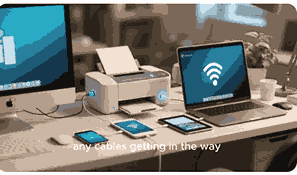
Google Cloud Print was developed by Google to make printing easier, allowing users to connect printers to the cloud and print from anywhere using their devices. With this technology, you could print directly from desktops, laptops, tablets, or mobile phones without needing complicated drivers or local connections. Many businesses and individuals used Google Cloud Print because of its convenience, speed, and compatibility with different operating systems. In this article, we will explain how to add a printer to Google Cloud Print, the setup steps, and alternative solutions since Google Cloud Print was deprecated.
What Is A Printer?
A printer is an external device connected to a computer, network, or mobile device that produces physical copies of digital documents, images, or files. Printers come in different types, including inkjet, laser, wireless, and multifunction printers that can scan, fax, and copy. Printers communicate with devices through USB, Ethernet, Wi-Fi, or cloud-based services like Google Cloud Print. The primary purpose of a printer is to convert digital data into tangible paper documents. Over the years, advancements in printer technology have enabled mobile printing, remote printing, and integration with cloud services. Understanding what a printer does helps in setting up advanced features like Google Cloud Print.
Understanding Google Cloud Print
Google Cloud Print was a cloud-based service by Google that connected printers to the internet. It allowed users to manage print jobs remotely and share printers with others across different locations. Unlike traditional printing that required direct connections, Google Cloud Print simplified workflows for businesses, schools, and individuals. Users could print from Chrome browsers, Gmail, Google Docs, and even Android and iOS apps. The service supported both cloud-ready printers and classic printers connected via Google Chrome. Even though Google officially ended the service in 2020, many people still search for ways to add printers, set them up, or look for alternatives.
Steps To Add A Printer To Google Cloud Print
Adding a printer to Google Cloud Print required either a cloud-ready printer or a traditional printer connected through a computer. For cloud-ready printers, you simply registered the printer by signing into your Google account on the printer’s web interface and enabling Google Cloud Print. For classic printers, you needed to use Google Chrome. You would open Chrome, go to settings, and enable Google Cloud Print under advanced options. Once added, the printer appeared under your Google account, allowing you to send print jobs directly from Chrome or mobile apps. Although the service is no longer active, the steps highlight how easy it was to integrate printers with the cloud.
Cloud Ready Printers Vs Classic Printers
There were two categories of printers supported by Google Cloud Print: cloud-ready and classic printers. Cloud-ready printers had built-in support for Google Cloud Print. They connected directly to the internet and registered themselves with a Google account without needing a computer. Classic printers, on the other hand, were traditional USB or network printers that relied on Google Chrome as a connector. A computer acted as the bridge between the printer and the cloud. While cloud-ready printers offered more convenience, classic printers provided flexibility for users with older devices. Understanding the difference helped in choosing the right setup method.
Benefits Of Using Google Cloud Print
Google Cloud Print offered many benefits before its discontinuation. It eliminated the need for drivers and complicated installations, allowing users to print from any device. It was platform-independent, supporting Windows, macOS, Linux, ChromeOS, Android, and iOS. Users could share printers with colleagues, family, or students with just an email address. Security was another advantage, as documents were transmitted over secure connections. The service also supported advanced features such as remote printing and printing to FedEx Office locations. Businesses loved Google Cloud Print because it reduced IT workloads and simplified device management. Its flexibility and ease of use made it a popular printing solution.
Common Problems With Google Cloud Print
Like any technology, Google Cloud Print faced certain challenges. Some users experienced difficulty registering their printers, especially classic models. Connectivity issues often occurred when the computer acting as a bridge was offline. Others faced authentication errors when using multiple Google accounts. Printing delays or failed jobs were sometimes caused by unstable internet connections. Another limitation was reliance on Google Chrome for classic printers, which limited flexibility. Despite these challenges, many users found troubleshooting easy, as most issues could be fixed by updating Chrome, checking internet connectivity, or re-registering the printer.
Alternatives To Google Cloud Print
Since Google Cloud Print was discontinued in 2020, users have sought alternatives for remote and cloud printing. Many printer manufacturers, including HP, Canon, Epson, and Brother, provide their own cloud printing services and mobile apps. Microsoft’s Universal Print offers enterprise-level cloud printing for organizations using Microsoft 365. Other alternatives include PaperCut Mobility Print, Printix, and direct Wi-Fi or AirPrint solutions for mobile devices. While none of these services are exact replacements for Google Cloud Print, they provide similar convenience and functionality, ensuring that remote printing remains accessible to users worldwide.
How To Print From Google Chrome Without Google Cloud Print
After the deprecation of Google Cloud Print, users can still print directly from Chrome using local printers. When you open a webpage or document in Chrome, pressing “Ctrl + P” (Windows) or “Command + P” (Mac) opens the print dialog box. Here, you can select any connected printer, adjust settings such as layout, margins, and paper size, and send the print job. For wireless printing, ensure your device and printer are connected to the same Wi-Fi network. Chrome also supports PDF saving, enabling users to keep a digital version of their files instead of printing.
Conclusion
Google Cloud Print was a revolutionary service that simplified printing for users across the globe. While the service is no longer active, understanding how it worked and how to add a printer to Google Cloud Print provides valuable insights into the evolution of cloud-based printing. Today, businesses and individuals have access to alternative solutions from major printer manufacturers and third-party providers, ensuring that cloud printing remains relevant. The future of printing will continue to embrace mobile-first, cloud-based, and wireless technologies.
Frequently Asked Questions
1. How Do I Add A Printer To Google Cloud Print?
To add a printer to Google Cloud Print, you first needed to determine whether your printer was cloud-ready or a classic printer. For cloud-ready printers, the process was straightforward: log into the printer’s web interface, sign in with your Google account, and enable Google Cloud Print. For classic printers, you had to connect them through Google Chrome. By navigating to Chrome’s settings, selecting advanced options, and enabling Google Cloud Print, you could register the printer. Once completed, the printer appeared in your Google account and was accessible from any connected device. However, since Google Cloud Print has been discontinued, users now rely on manufacturer-specific apps or alternatives.
2. What Is Google Cloud Print?
Google Cloud Print was a cloud-based printing solution developed by Google that allowed users to print from any device connected to the internet. Instead of relying on drivers or cables, users could register their printers with a Google account and send print jobs remotely. It worked with both cloud-ready printers and traditional models connected through Google Chrome. The service was especially useful for businesses, schools, and individuals who needed cross-platform compatibility. It allowed document sharing, remote printing, and printing from mobile apps. Although Google discontinued the service in 2020, it remains an important milestone in cloud printing history.
3. Why Did Google Shut Down Google Cloud Print?
Google shut down Google Cloud Print in December 2020, citing advancements in native printing support across operating systems. By that time, Windows, macOS, Android, and ChromeOS had all developed their own improved printing capabilities, reducing the need for Google Cloud Print. Additionally, managing the service required resources that Google decided to allocate elsewhere. While many users were disappointed, the decision encouraged printer manufacturers and software developers to create alternative cloud printing solutions. Today, users can choose from manufacturer-specific services like HP Smart or enterprise-level services such as Microsoft Universal Print.
4. Can I Still Use Google Cloud Print After 2020?
No, Google Cloud Print is no longer available after December 2020. Google officially discontinued the service, and users cannot register printers, send jobs, or use the cloud-based features. Those who previously used the service have had to switch to alternatives. Printer manufacturers such as HP, Canon, Epson, and Brother provide their own apps that allow mobile and remote printing. Microsoft Universal Print offers cloud printing for organizations, while services like PaperCut Mobility Print also provide flexible options. Although the original Google Cloud Print is unavailable, similar services ensure that remote and wireless printing remains convenient.
5. How Did Google Cloud Print Work?
Google Cloud Print worked by connecting a printer to the cloud using a Google account. For cloud-ready printers, registration occurred directly through the printer’s interface. For classic printers, Google Chrome acted as the connector between the printer and the cloud. Once registered, the printer became available in the user’s Google account. Users could then send print jobs from devices like laptops, smartphones, or tablets using apps such as Gmail, Google Docs, or Chrome. The service transmitted data securely and allowed users to print remotely or share printers with others, making printing highly flexible and accessible.
6. What Printers Supported Google Cloud Print?
Google Cloud Print supported both cloud-ready printers and classic models. Cloud-ready printers, developed by brands like HP, Epson, Canon, and Brother, had built-in support for Google Cloud Print. These printers could be registered directly with a Google account over the internet. Classic printers, however, were traditional models connected via USB or network that required Google Chrome to act as the bridge. Once registered, they appeared under the user’s Google account and could be accessed remotely. Google maintained a list of supported printers, and over time, most modern printers released by major manufacturers offered compatibility.
7. How Did I Share A Printer With Google Cloud Print?
Sharing a printer with Google Cloud Print was one of its most powerful features. After registering your printer with Google Cloud Print, you could manage it from your Google account. Within the management console, you had the option to share your printer with others by entering their Gmail address. Once invited, they received access and could send print jobs to your printer remotely. Permissions could also be adjusted, giving you control over who could print. This was especially useful for workplaces, schools, and families. It simplified collaboration by allowing multiple people to use the same printer without complex setups.
8. Was Google Cloud Print Secure?
Yes, Google Cloud Print was designed with security in mind. Print jobs were sent over secure HTTPS connections, ensuring that documents were encrypted during transmission. Google accounts provided authentication, so only authorized users could access registered printers. Additionally, administrators could manage access rights and monitor usage for shared printers. While no online service is completely risk-free, Google Cloud Print offered a strong level of protection compared to traditional network printing methods. However, after its discontinuation, users were encouraged to adopt secure alternatives such as Microsoft Universal Print or manufacturer-specific apps that also emphasize encryption and privacy.
9. How Did I Add A Classic Printer To Google Cloud Print?
Adding a classic printer to Google Cloud Print involved using Google Chrome as the connector. First, you needed to install the latest version of Chrome on your computer and ensure the printer was connected via USB or network. Next, you navigated to Chrome’s settings, found the advanced printing section, and enabled Google Cloud Print. After signing into your Google account, you could register the printer. Once added, the printer appeared in your Google account and became accessible from any connected device. The computer needed to remain on and connected to the internet for the printer to function properly.
10. Could I Print From Mobile Devices Using Google Cloud Print?
Yes, Google Cloud Print supported mobile printing from both Android and iOS devices. For Android, many apps like Gmail, Google Drive, and Chrome had built-in support for Google Cloud Print. Users could select the “Print” option and choose their registered printer. On iOS devices, Google provided the Cloud Print app, and third-party apps also supported the service. This made it easy to print emails, photos, or documents directly from mobile phones or tablets. Mobile printing was one of the main reasons users adopted Google Cloud Print, as it eliminated the need for cables, drivers, or complicated configurations.
11. Did Google Cloud Print Work With Chromebooks?
Yes, Google Cloud Print was especially designed to work seamlessly with Chromebooks. Since Chromebooks relied heavily on cloud-based services, Google Cloud Print provided a perfect solution for printing. Users could register their printers through Chrome and manage them directly from their Chromebook settings. Once added, printers were accessible across all devices linked to the same Google account. This integration was widely used in schools and businesses where Chromebooks were popular. Even after its discontinuation, Chromebooks support native printing solutions and can connect directly to printers over Wi-Fi or network, ensuring users continue to enjoy convenient printing options.
12. Could I Use Google Cloud Print Without A Google Account?
No, Google Cloud Print required a Google account for registration and usage. The service was built around Google’s ecosystem, which meant that authentication and printer management were tied to your account. Without signing in, you could not register a printer or access it remotely. The account also allowed users to share printers with others, manage permissions, and control access. This integration ensured security and ease of use but limited flexibility for those outside Google’s platform. After the service ended, users have turned to alternatives that may or may not require a Google account, depending on the provider.
13. Did Google Cloud Print Work Without An Internet Connection?
No, Google Cloud Print required an internet connection to function. Since the service was cloud-based, printers had to communicate with Google’s servers to register, authenticate, and process print jobs. For cloud-ready printers, this meant connecting directly to the internet. For classic printers, the computer acting as the bridge needed to stay online. Without internet access, the service could not transmit print jobs. While this limitation affected some users, it was balanced by the flexibility of remote and mobile printing. Alternatives available today often include offline support, such as direct Wi-Fi printing or local network connections.
14. What Were The Limitations Of Google Cloud Print?
While Google Cloud Print was convenient, it had several limitations. First, it relied heavily on an internet connection, meaning offline printing was not possible. Second, classic printers required a computer with Chrome to act as a connector, which could be inconvenient. Third, not all printers were supported, especially older models without updates. Security was generally strong, but some users were concerned about sensitive documents passing through Google’s servers. Finally, the biggest limitation was its discontinuation, which forced users to migrate to other services. Despite these challenges, Google Cloud Print remained one of the most innovative cloud printing solutions of its time.
15. Could I Print To FedEx Using Google Cloud Print?
Yes, Google Cloud Print allowed users to print directly to FedEx Office locations. Google partnered with FedEx to enable customers to send print jobs to nearby FedEx stores using their Google Cloud Print account. This feature was especially useful for travelers, students, or professionals who needed quick access to high-quality printing without owning a printer. The documents could be retrieved by visiting a FedEx Office location and providing the necessary details. While this service ended with the discontinuation of Google Cloud Print, similar features may be available through other printing apps and third-party providers.
16. How Did Google Cloud Print Support Multiple Users?
Google Cloud Print supported multiple users by allowing printer sharing through Google accounts. Once a printer was registered, the owner could invite others by entering their Gmail addresses. Shared users received access rights and could send print jobs remotely. The owner retained control and could revoke or adjust permissions at any time. This made it easy for families, schools, and workplaces to manage shared printing without needing complicated network setups. Multiple users could print simultaneously, and the service queued jobs accordingly. This collaborative feature was one of the main advantages that attracted users to Google Cloud Print.
17. Could I Print From Google Docs Using Google Cloud Print?
Yes, Google Cloud Print integrated seamlessly with Google Docs. When working on a document, users could select “Print” from the file menu and choose their registered printer. The document was then transmitted securely to the printer, allowing for remote or local printing. This integration also extended to other Google Workspace apps such as Sheets, Slides, and Gmail. By combining cloud-based productivity tools with cloud printing, Google made collaboration and document management easier. Although the service is no longer available, modern alternatives like HP Smart and Microsoft Universal Print also integrate with productivity software for seamless workflows.
18. Did Google Cloud Print Support Enterprise Businesses?
Yes, enterprise businesses widely used Google Cloud Print because of its scalability and convenience. IT administrators could manage multiple printers across offices and provide access to employees using Google Workspace accounts. This eliminated the need for complicated network configurations and driver installations. Employees could print from Chromebooks, laptops, or mobile devices, whether in the office or working remotely. The ability to share printers, monitor usage, and simplify workflows made Google Cloud Print attractive for businesses of all sizes. After its discontinuation, many enterprises migrated to Microsoft Universal Print or other third-party cloud printing solutions tailored for organizations.
19. Could I Use Google Cloud Print With Non-Google Apps?
Yes, Google Cloud Print was compatible with many non-Google apps. Developers integrated the service into their applications, allowing users to print directly to registered printers. For example, popular productivity and PDF apps supported Google Cloud Print, making it easier to send documents from different platforms. Android and iOS developers often included print functionality powered by Google Cloud Print. This cross-platform compatibility was one of its strongest advantages, enabling users to avoid the limitations of traditional printer drivers. Today, alternatives like AirPrint for iOS or Mopria for Android provide similar broad compatibility with apps outside specific ecosystems.
20. What Are The Best Alternatives To Google Cloud Print Today?
With the discontinuation of Google Cloud Print, several alternatives have emerged. HP Smart, Canon Print, and Epson Connect provide manufacturer-specific solutions that allow remote and mobile printing. Microsoft Universal Print is a robust enterprise solution integrated with Microsoft 365. PaperCut Mobility Print offers flexibility for schools and businesses, while Printix provides cloud-based management features. For Apple users, AirPrint is a reliable option, while Android users benefit from Mopria Print Service. Choosing the best alternative depends on your devices, operating systems, and specific printing needs. These solutions ensure that cloud and wireless printing remain accessible in today’s digital world.
FURTHER READING
- What Is A Virtual Printer? | Definition, Meaning, Uses, Benefits, Setup, Of Virtual Printer And How It Works
- Can I Scan Documents Without A Printer? | Best Ways To Scan Without A Printer For Free
- How To Print A Test Page From A Printer | Easy Guide To Printer Test Page Printing And Troubleshooting
- How To Fix A Printer Printing Too Dark | Troubleshooting And Easy Solutions For Printer Quality Issues
- What Is A Printer Test Page? | Definition, Purpose, Benefits, And Troubleshooting Guide To Printer Test Pages
- Why Is My Printer Printing Extra Blank Pages? | Causes, Fixes, And Troubleshooting Guide
- How To Connect A USB Printer To Wi-Fi | Simple Setup Guide For Wireless Printing
- Why Is My Printer Not Printing From My Phone? | Common Mobile Printing Problems And Fixes For Wireless Printers
- How To Fix Printer Ghosting Problems | Causes, Solutions, And Maintenance Tips For Clear Print Quality
- Can I Print Directly From My Camera To A Printer? | Direct Photo Printing Guide For Cameras And Printers