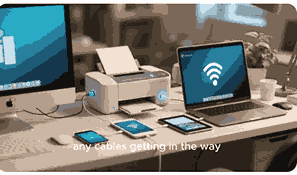
Wireless printers have revolutionized the way people print documents, images, and files by eliminating the need for messy cables and complicated setups. These advanced devices connect seamlessly to computers, smartphones, tablets, and networks using wireless technologies such as Wi-Fi, Bluetooth, or cloud services. With their flexibility, portability, and convenience, wireless printers are now essential for both home offices and large organizations. In this comprehensive guide, you will learn everything about wireless printers, how they work, the technologies behind them, their advantages, and common troubleshooting solutions that will help you make the most of your printing experience.
What Is A Wireless Printer?
A wireless printer is a type of printer that connects to computers, smartphones, tablets, and other devices without the use of traditional wired connections such as USB cables. Instead, it relies on wireless communication technologies such as Wi-Fi, Bluetooth, or cloud-based printing to receive print commands from devices. Once connected to the same wireless network, a user can print from virtually anywhere within range. Wireless printers are designed for both personal and professional use, offering faster setup, easier accessibility, and the ability to connect multiple devices at the same time. This makes them highly efficient for homes, small businesses, and corporate environments.
Types Of Wireless Printer Connections
There are several types of wireless printer connections, and each works differently depending on the user’s needs and device compatibility. Wi-Fi printers connect through a local area network (LAN), making them ideal for shared use in offices and homes. Bluetooth printers are more direct, enabling quick, short-range connections between a printer and devices like smartphones or laptops. Cloud printing technology allows documents to be sent to a printer from anywhere in the world through services like Google Cloud Print or Apple AirPrint. Some printers also feature Near Field Communication (NFC), which lets users print instantly by tapping their device near the printer.
How Wireless Printers Communicate With Devices
Wireless printers communicate with devices using advanced digital protocols that transmit data wirelessly. When you send a document to print, your computer, smartphone, or tablet converts it into a digital print job and transmits it through Wi-Fi, Bluetooth, or cloud-based networks. The wireless printer receives the data and interprets it using its built-in drivers and software, then transfers the digital instructions to the printing mechanism, producing the physical document. The communication process is secure, efficient, and fast, provided that the devices are connected to the same network or properly paired through Bluetooth or NFC.
Benefits Of Using A Wireless Printer
Wireless printers provide numerous benefits that make them more practical than traditional wired printers. First, they offer convenience by eliminating messy cables and making it possible to print from any location within the network range. Second, they support multiple device connections, allowing families, students, or businesses to share a single printer without hassle. Third, they are compatible with mobile devices, making it easy to print directly from smartphones or tablets. Wireless printers also save space, are more aesthetically pleasing, and integrate seamlessly with smart home or office setups. Their combination of mobility, efficiency, and flexibility makes them a valuable tool in the modern digital era.
Common Issues With Wireless Printers
While wireless printers are efficient, they sometimes encounter technical issues. The most common problems include connectivity errors, where the printer fails to connect to the Wi-Fi network, leading to delays. Slow printing speeds may occur if the network is congested. Printer offline errors can happen when devices fail to detect the printer, often caused by outdated drivers or configuration errors. Some users experience print quality issues due to incorrect settings or low ink levels. Troubleshooting typically involves restarting the router, reinstalling printer drivers, updating firmware, and ensuring that both the printer and device are on the same network.
Setting Up A Wireless Printer
Setting up a wireless printer involves a few essential steps. First, unbox the printer and install any included ink or toner cartridges. Connect the printer to a power source and turn it on. Next, use the printer’s control panel to select the wireless setup option and connect it to your Wi-Fi network by entering the correct credentials. Once connected, install the printer software or drivers on your computer or mobile device. Modern printers often allow automatic detection and setup. Some models also support WPS (Wi-Fi Protected Setup), where you simply press the WPS button on your router and printer to establish a connection instantly.
Security Considerations For Wireless Printers
Wireless printers, like any network-connected device, can be vulnerable to security risks if not properly configured. Hackers can potentially intercept data sent to printers or access sensitive documents stored in memory. To improve security, always connect your printer to a secure, password-protected Wi-Fi network. Regularly update the printer’s firmware to fix vulnerabilities. Disable remote printing features if not in use, and configure user authentication for businesses. It’s also advisable to assign the printer a static IP address and use encryption protocols such as WPA3 for Wi-Fi connections. With these security measures, you can safely use your wireless printer without risks of unauthorized access.
Troubleshooting Wireless Printer Problems
When a wireless printer fails to work properly, troubleshooting is necessary. Start by checking the Wi-Fi connection and ensuring the printer and device are on the same network. Restart both the printer and router to refresh the connection. If the printer is offline, reinstall or update the drivers on your device. For Bluetooth printers, ensure that the devices are paired correctly and within range. If print jobs are delayed, clear the print queue and try again. Updating the firmware often resolves many issues. For persistent problems, factory resetting the printer and setting it up again usually resolves connectivity errors.
Wireless Printers And Mobile Printing
Mobile printing is one of the biggest advantages of wireless printers. With smartphone integration, users can print directly from their devices using apps or built-in features like AirPrint for iOS and Google Cloud Print for Android. Many printer manufacturers also offer dedicated mobile apps that allow advanced features such as scanning, remote monitoring, and ink level tracking. NFC technology allows one-tap printing from compatible smartphones, adding more convenience. Mobile printing is especially useful for students, remote workers, and business professionals who need to print documents quickly without transferring files to a computer. It makes wireless printers versatile and future-ready.
Cloud Printing And Wireless Printers
Cloud printing is a modern feature that enhances the capabilities of wireless printers. Instead of relying only on local networks, users can print from anywhere in the world by uploading documents to cloud services. Popular platforms include Google Drive, Dropbox, and iCloud. With this feature, remote teams or individuals working away from the office can still print important documents at the office or home printer. Cloud printing also integrates well with mobile devices, enabling seamless cross-platform printing. This feature makes wireless printers not only more versatile but also essential for businesses that prioritize collaboration and remote work efficiency.
Conclusion
Wireless printers are an essential tool in the modern digital workspace, offering convenience, flexibility, and efficient connectivity without cables. By using Wi-Fi, Bluetooth, NFC, and cloud-based printing, they simplify how people print from multiple devices. While they may encounter connectivity or configuration issues, most problems are easy to troubleshoot with the right steps. Their ability to support mobile printing, cloud services, and secure communication makes them highly valuable for homes, schools, and businesses. With wireless printers, printing becomes more streamlined, modern, and adaptable to today’s fast-paced lifestyle.
Frequently Asked Questions
1. How Does A Wireless Printer Work?
A wireless printer works by receiving print jobs through wireless communication technologies such as Wi-Fi, Bluetooth, or cloud printing. Instead of using physical cables like traditional printers, it connects directly to a wireless network, allowing multiple devices such as computers, smartphones, and tablets to send print commands. The device transmitting the print job converts the file into data, which is sent over the network to the printer. The printer’s internal processor interprets this data and produces the output. As long as the printer and device are on the same wireless network or properly paired, printing becomes seamless, fast, and cable-free.
2. What Are The Main Types Of Wireless Printers?
Wireless printers come in different types based on their connectivity features. Wi-Fi printers connect through a shared wireless network, making them ideal for multiple users in homes and offices. Bluetooth printers allow direct short-range connections, suitable for quick printing from mobile devices. Cloud-enabled printers let users send print jobs from anywhere through services like Google Cloud Print or Apple AirPrint. NFC-enabled printers allow users to tap a compatible device directly on the printer for instant printing. Some models combine all these technologies, giving users flexible options to print conveniently across multiple platforms and from various devices without physical cables.
3. What Devices Can Connect To A Wireless Printer?
Wireless printers are designed to connect with a wide range of devices for maximum flexibility. Computers, laptops, tablets, and smartphones can all connect to wireless printers via Wi-Fi, Bluetooth, or cloud services. Mobile operating systems like iOS and Android support wireless printing through built-in features such as AirPrint or Google Cloud Print. Many wireless printers also support smart devices, including home assistants like Amazon Alexa or Google Assistant, which allow voice-activated printing. In business settings, wireless printers can connect to multiple computers in a network, making it easy for teams to share a single printer. This compatibility makes them highly versatile.
4. What Is The Difference Between A Wireless Printer And A Wired Printer?
The key difference between a wireless printer and a wired printer lies in their connectivity. A wired printer uses physical cables such as USB or Ethernet to connect directly to a device or network, limiting mobility and requiring specific placement near the computer. A wireless printer, on the other hand, uses technologies like Wi-Fi, Bluetooth, or cloud printing, enabling devices to send print jobs without cables. This provides greater flexibility, allowing printing from anywhere within range. Wireless printers also support multiple devices at once, while wired printers usually require direct one-to-one connections, making wireless printers more convenient and efficient.
5. How Do You Set Up A Wireless Printer?
Setting up a wireless printer involves several steps to ensure proper connectivity. First, power on the printer and install ink or toner cartridges. Next, use the printer’s control panel to select the wireless network setup option and connect it to your Wi-Fi network by entering the correct credentials. For routers with WPS, press the WPS button on both the router and printer to establish a quick connection. Install the required printer drivers or software on your computer or mobile device. Many modern printers support automatic detection, making setup easier. Once connected, test by printing a sample document wirelessly.
6. Can A Wireless Printer Work Without Wi-Fi?
Yes, some wireless printers can function without Wi-Fi by using alternative wireless technologies. Bluetooth-enabled printers allow direct device-to-printer connections without a router. NFC (Near Field Communication) printers let users print by tapping compatible smartphones directly on the printer. Additionally, some printers create their own Wi-Fi Direct hotspot, which allows devices to connect directly without a traditional wireless network. While Wi-Fi is the most common and versatile method, these alternatives make wireless printing possible in areas without internet access. However, features like cloud printing and remote access typically require a stable internet-connected Wi-Fi network to function properly.
7. Are Wireless Printers Secure To Use?
Wireless printers can be secure if configured properly, but they also pose potential risks if left unprotected. Hackers may attempt to intercept print jobs or exploit vulnerabilities in network-connected printers. To ensure security, users should always connect their printers to secure, password-protected Wi-Fi networks and update the firmware regularly. Using encryption protocols like WPA2 or WPA3 enhances protection. For businesses, enabling user authentication and restricting remote printing can further reduce risks. Disabling unnecessary features and monitoring printer access logs also improve safety. With proper precautions, wireless printers can be as secure as any other network-connected device.
8. What Are The Advantages Of Using A Wireless Printer?
Wireless printers offer several advantages that make them preferable to traditional wired models. They eliminate the need for cables, reducing clutter and offering placement flexibility. Multiple devices, including computers, smartphones, and tablets, can connect simultaneously, improving efficiency in both homes and offices. Wireless printers support mobile printing, allowing users to print directly from smartphones. They also integrate with cloud services for remote printing, making them ideal for modern workflows. Additionally, many models are compact, space-saving, and compatible with smart home assistants. Overall, wireless printers provide convenience, flexibility, and advanced features that suit today’s digital and mobile lifestyle.
9. What Problems Do Wireless Printers Commonly Have?
Wireless printers, while convenient, can experience common issues. Connectivity problems are the most frequent, such as when the printer fails to connect to the Wi-Fi network. Slow printing may occur if the wireless signal is weak or if the network is overloaded. Printers may also go offline unexpectedly due to outdated drivers or configuration errors. Print quality problems, including faded or streaked prints, are usually caused by low ink or incorrect settings. Security risks also exist if the printer is not properly configured. Troubleshooting often involves restarting the printer and router, updating drivers, or resetting the network settings.
10. Can A Wireless Printer Work With Multiple Devices?
Yes, a wireless printer is specifically designed to work with multiple devices at once, making it highly efficient for both home and office environments. Once connected to a Wi-Fi network, any device on that network—such as laptops, desktops, tablets, and smartphones—can send print jobs to the printer. Cloud-enabled wireless printers even allow remote users to send documents from outside the local network. This eliminates the need for physically sharing cables or manually connecting devices. Multiple device support not only saves time but also increases productivity by enabling seamless access to printing resources for families, students, and business teams.
11. How Do Wireless Printers Connect To Smartphones?
Wireless printers connect to smartphones using several technologies. Most modern printers support Wi-Fi Direct, which allows a direct connection without a router. For iOS devices, AirPrint provides built-in support for wireless printing, while Android devices often use Google Cloud Print or manufacturer-specific apps. Many wireless printers also offer dedicated mobile applications that allow users to print, scan, and monitor printer status directly from their phones. NFC-enabled printers provide an even faster option, letting users tap their phone against the printer to start printing instantly. These options make it easy and convenient to print from smartphones anywhere.
12. What Is The Range Of A Wireless Printer?
The range of a wireless printer depends on the type of wireless connection it uses. Wi-Fi-enabled printers typically function within the coverage area of the router, usually between 100 to 300 feet indoors, depending on signal strength and interference. Bluetooth printers have a much shorter range, usually between 30 to 50 feet, and work best for direct, close connections. NFC-enabled printers require near contact, usually just a tap. Wi-Fi Direct connections have similar range limits as traditional Wi-Fi. For cloud-enabled printers, distance does not matter, as users can send print jobs from anywhere with internet access.
13. How Does Cloud Printing Work With Wireless Printers?
Cloud printing allows users to send documents to wireless printers over the internet instead of relying only on local networks. Services like Google Cloud Print, Apple AirPrint, and manufacturer-specific platforms enable remote printing by linking the printer to a cloud account. When a user uploads a document to the cloud service, it sends the print job directly to the connected wireless printer, regardless of location. This feature is especially useful for remote workers, students, and businesses with multiple offices. Cloud printing also enhances collaboration by allowing team members to send documents to a shared printer from different locations worldwide.
14. Do Wireless Printers Work With Tablets And Laptops?
Yes, wireless printers are fully compatible with tablets and laptops, providing flexibility for various users. Tablets running iOS or Android can connect through built-in wireless printing options such as AirPrint and Google Cloud Print. Laptops, whether running Windows, macOS, or Linux, can connect through Wi-Fi or Bluetooth, depending on the printer’s supported technologies. Many printer manufacturers also offer software and applications that enhance printing from tablets and laptops, including advanced settings and scanning features. As long as the devices are connected to the same wireless network or paired correctly, printing from tablets and laptops is seamless and convenient.
15. How Do You Troubleshoot A Wireless Printer That Is Not Responding?
When a wireless printer is not responding, troubleshooting steps can quickly fix the issue. Start by checking if the printer is powered on and properly connected to the wireless network. Restart the router and the printer to refresh the connection. Verify that the device sending the print job is on the same network. Reinstall or update the printer drivers and firmware to ensure compatibility. For Bluetooth printers, re-pair the devices if the connection fails. Clearing the print queue may resolve stuck jobs. If issues persist, perform a factory reset on the printer and set it up again from scratch.
16. Can A Wireless Printer Print Without A Computer?
Yes, wireless printers can print without a computer, thanks to their compatibility with mobile devices and cloud services. Users can print directly from smartphones and tablets using Wi-Fi, Bluetooth, or NFC connections. Many wireless printers also include USB ports and memory card slots, allowing printing directly from storage devices. Cloud-enabled models allow printing from anywhere without needing a computer, as long as the document is uploaded to a supported service like Google Drive or Dropbox. This versatility makes wireless printers ideal for mobile users, students, and businesses that rely on flexible and computer-independent printing options.
17. What Security Risks Are Associated With Wireless Printers?
Wireless printers can pose certain security risks if not configured correctly. Unsecured connections can allow unauthorized users to access sensitive print jobs or even gain access to the wider network. Hackers may exploit vulnerabilities in outdated printer firmware. Open Wi-Fi networks increase these risks significantly. To minimize threats, it is important to secure wireless printers with strong passwords, regularly update firmware, and disable unnecessary features like remote access. Businesses should implement access restrictions and encryption protocols like WPA3 to enhance protection. With proper precautions, the risks associated with wireless printers can be significantly reduced for both home and office users.
18. Are Wireless Printers More Expensive Than Wired Printers?
Wireless printers are generally slightly more expensive than wired models due to the added technology and features they include. The price difference, however, has decreased over time as wireless printing has become more common. Entry-level wireless printers are now quite affordable, making them accessible to students, home users, and small businesses. High-end models with advanced wireless features, such as cloud printing and NFC, tend to cost more. While wireless printers may require a larger initial investment, their convenience, flexibility, and ability to connect multiple devices often make them more cost-effective in the long run.
19. Can You Use A Wireless Printer In A Large Office?
Yes, wireless printers are highly suitable for large offices, especially when connected to a shared Wi-Fi network. Multiple employees can send print jobs simultaneously without needing physical cables. Cloud-enabled printers allow remote team members to send documents for printing at the office. Advanced business wireless printers also include features like secure user authentication, large paper capacity, and multifunction capabilities such as scanning and faxing. However, in very large environments, IT departments may combine both wired and wireless connections to ensure reliability and security. Overall, wireless printers enhance productivity and collaboration in large office settings.
20. What Should You Consider Before Buying A Wireless Printer?
Before buying a wireless printer, it’s important to consider several factors. First, check connectivity options such as Wi-Fi, Bluetooth, NFC, and cloud compatibility to ensure they match your
You said:
Continue
ChatGPT said:
20. What Should You Consider Before Buying A Wireless Printer?
Before buying a wireless printer, it’s important to consider several factors. First, check connectivity options such as Wi-Fi, Bluetooth, NFC, and cloud compatibility to ensure they match your devices. Second, evaluate printing speed and quality, especially if you plan to print large volumes or high-resolution images. Third, check compatibility with mobile devices and operating systems, as seamless integration is crucial for convenience. Look at running costs, including ink or toner expenses, and ensure replacement supplies are affordable. Security features, such as encryption and password protection, are also essential for business users. Lastly, consider extra functions like scanning, faxing, and duplex printing for better long-term value.
Further Reading
Meta Description
- How To Fix A Printer Not Responding Error | Printer Troubleshooting Guide For Quick And Easy Solutions
- What Is The Best Printer For High-Volume Printing? | Top Printers For Bulk Printing, Speed, And Cost-Effectiveness
- Why Is My Printer Showing Error Messages? | Common Causes, Fixes, And Troubleshooting Guide For Printer Errors
- How To Add A Printer To Google Cloud Print | Setup, Configuration, And Troubleshooting Guide For Google Cloud Printing
- What Is A Virtual Printer? | Definition, Meaning, Uses, Benefits, Setup, Of Virtual Printer And How It Works
- Can I Scan Documents Without A Printer? | Best Ways To Scan Without A Printer For Free
- How To Print A Test Page From A Printer | Easy Guide To Printer Test Page Printing And Troubleshooting
- How To Fix A Printer Printing Too Dark | Troubleshooting And Easy Solutions For Printer Quality Issues
- What Is A Printer Test Page? | Definition, Purpose, Benefits, And Troubleshooting Guide To Printer Test Pages
- Why Is My Printer Printing Extra Blank Pages? | Causes, Fixes, And Troubleshooting Guide